Trump Suspends Iran Attack, Demands Full Hormuz Reopening — NRG-IA
Geopolitică & Energie Author: Ioana BuzoaicaTrump conditionally suspends US attack on Iran, linking de-escalation to a swift deal and the full reopening of the critical Strait of Hormuz.
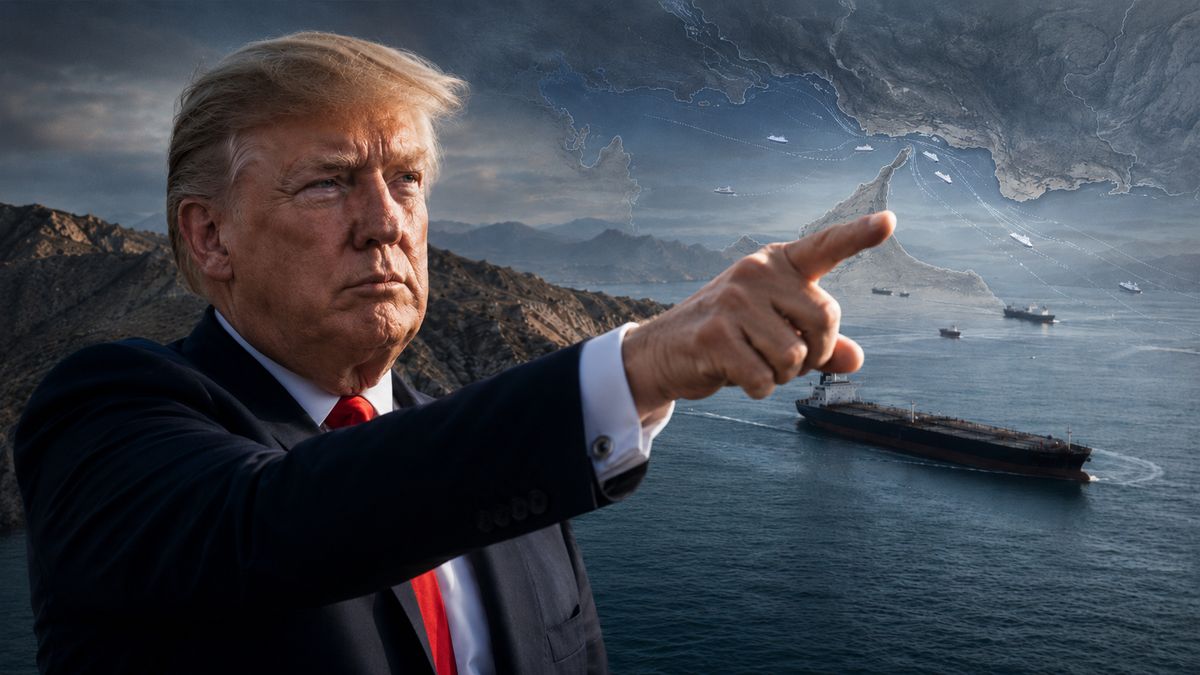
Donald Trump announced on Saturday evening that he is suspending a new US attack on Iran, conditioning the decision on the possibility of a swift agreement that addresses Washington's demands regarding the Iranian nuclear program and leads to the full reopening of the Strait of Hormuz. The US President stated that Iran and other Middle Eastern nations had requested time to finalize the deal. According to Trump, the deal currently in the works should include the "immediate, complete, and total" reopening of the strait and what the US president called an end to the Iranian nuclear threat. Trump stated that, based on the request received from the region, he decided to call off the attack as long as the agreement can be reached quickly. However, the announcement does not equate to a confirmed agreement by all parties at this stage. Iran has not publicly provided any equivalent confirmation of the parameters described by Trump. The US President also stated that Israel joins him in this commitment, though Reuters noted that the Israeli government had not immediately made a public statement of its own to this effect. From Preparing Bombardments to a Conditional Pause The shift in direction occurred in less than 24 hours. On Friday, Reuters reported, citing CBS News, that the United States and Israel were preparing a bombing campaign against targets within Iran's energy infrastructure, with potential strikes over the weekend. Donald Trump had not yet given final approval, according to sources cited by CBS. The plans under consideration would have represented one of the harshest campaigns to date against Iranian energy infrastructure, with one option calling for the strikes to conclude before financial markets reopened on Monday. On Saturday evening, the military scenario was replaced, at least temporarily, by the prospect of negotiations in which the operation of the Strait of Hormuz holds an explicit place. The shift is significant for the energy market because the Strait of Hormuz is not just a front in the military confrontation. It is the critical route through which Gulf exporters ship vast quantities of crude oil, petroleum products, and liquefied natural gas to global markets. Iran Links a New US Attack to Gulf Energy Infrastructure The de-escalation announced by Trump follows direct Iranian warnings regarding the expansion of the conflict to regional energy infrastructure. Iranian Foreign Minister Abbas Araqchi stated in separate discussions with Turkish, Pakistani, and Saudi officials that Iran would respond decisively to any new aggression. In his conversation with Saudi Foreign Minister Prince Faisal bin Farhan, Araqchi warned that attacks by the United States and Israel, or the participation of regional states in such operations, would meet with a proportional response. Nournews, a publication affiliated with Iran's top security body, framed the threat in terms directly related to energy: a US attack on Iran's energy infrastructure could trigger Iranian strikes on oil fields in Saudi Arabia and the United Arab Emirates, as well as gas infrastructure in Qatar and Israel. For Gulf states, the risk of such an expansion would shift the conflict from the restriction of shipping lanes to physical production and export capacity. Saudi Crown Prince Mohammed bin Salman spoke with Trump on Saturday. Reuters confirmed the call through a White House official without providing further details, while the Associated Press reported that the Saudi leader expressed concern over a potential US escalation and the risk of Iranian retaliation against Saudi energy infrastructure and other Gulf states. Negotiations Emerge as Attacks Continue The diplomatic signal is not yet accompanied by a comparable normalization on the ground. Kuwait's military announced on Saturday that it had responded to Iranian drone attacks targeting several facilities deemed vital. A government facility in northern Kuwait and civilian properties on Bubiyan Island sustained material damage, with no casualties reported. Meanwhile, the United Kingdom Maritime Trade Operations reported two maritime incidents off Oman. In one case, a tanker was struck by an unknown projectile, damaging its engine room. In the second incident, the master of another tanker reported an explosion and an impact in the water in close proximity to the vessel, with no confirmed damage. These incidents demonstrate that the gap between an announced political agreement and the actual, safe, and commercially viable reopening of Hormuz remains considerable. Hormuz Is Not Completely Closed, but Traffic Has Plummeted The phrase "full reopening" used by Trump should not be confused with a situation where no vessels are transiting the strait. Kpler data showed that between June 7 and July 7, a period that includes the temporary truce, an average of approximately 45 vessels per day transited Hormuz. Following the resumption of clashes, the average dropped to about 13 daily transits , a…