Trump Suspends New Russia Sanctions, Shelves 100% Tariffs — NRG-IA
Geopolitică & Energie Author: Ioana BuzoaicaDonald Trump has suspended most new sanctions on Russia before enforcement, sparing China and India as high oil prices complicate strategy.
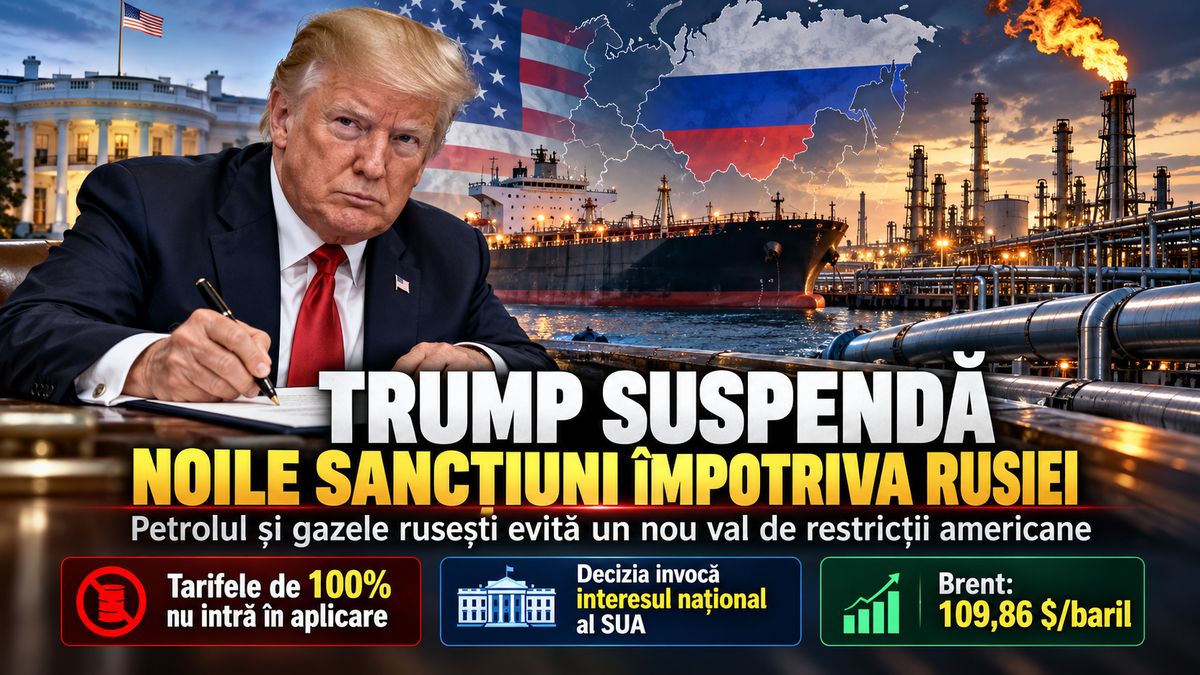
US President Donald Trump decided on October 16, 2026, to suspend the implementation of most new economic sanctions against Russia, including commercial tariffs of up to 100% on select countries purchasing Russian oil and natural gas. The executive order was signed just two days prior to the enforcement deadline set out in legislation enacted by Trump himself on September 18. The decision reduces the likelihood of immediate secondary restrictions on Moscow's energy trade and reshapes the economic leverage available to Washington in the war in Ukraine. The action targets the Lindsey O. Graham Sanctioning Russia and Iran Act of 2026, passed by the US Congress to escalate pressure on Russia and third-party partners aiding its energy revenues. The package featured tariffs of up to 500% on goods originating directly from Russia, tariffs of up to 100% on US imports from designated nations purchasing Russian energy or facilitating sanctions evasion, alongside restrictions on financial institutions, investments, and economic transactions. The suspension comes amid heightened volatility in global energy markets. On Friday, October 16, Brent crude futures settled at $109.86 per barrel after touching the $110 threshold—a five-month high. The escalating conflict in the Middle East, disruptions at Russian refineries, and tight global diesel supplies have intensified supply strains. Against this backdrop, the US administration seeks to curb energy costs while preserving sanctions as a core instrument of US-Russia policy. Trump Suspends Sanctions Just Four Weeks After Signing Bill into Law The Graham Act, signed into law on September 18, 2026, as Public Law 119-111, was designed to constrain Russia's revenue, financing, and broader economic support for its war against Ukraine. Passed with strong bipartisan support, the legislation extended pressure beyond previously targeted Russian individuals and entities by introducing major trade consequences for third countries maintaining energy ties with Moscow. However, the executive order issued on October 16 invokes an explicit provision within the statute itself. Section 115 empowers the US President to grant waivers from sanctions, restrictions, and tariffs, contingent on submitting a formal certification to Congress that the waiver serves US national security interests, accompanied by a justifying report. In the directive, Trump asserts that this procedural requirement was fulfilled and suspends the enforcement of the specified provisions. The waiver encompasses tariffs mandated under Sections 112 and 113, as well as extensive restrictions targeting Russian officials, financial institutions, investments, commercial transactions, and energy activities. While the statute remains in force, the executive order clarifies that pre-existing US sanctions enacted under other statutory authorities are not automatically affected. The suspension has no fixed expiration date: enforcement may be reviewed and reinstated via subsequent executive determination. This legal architecture allows Washington to maintain economic leverage without applying it immediately. The US administration retains the statutory flexibility to revoke waivers if diplomatic, trade, or national security developments warrant a policy shift. For Russia's trade partners, the distinction is crucial: the statutory risk of secondary tariffs remains, but active enforcement is paused for now. 100% Tariffs Threatening US Trade with China and India Suspended One of the statute's most consequential mechanisms targeted major buyers of Russian crude and natural gas. The secondary tariff mechanism authorized levies of up to 100% on goods imported into the United States from countries meeting legislative thresholds for Russian energy purchases or sanctions evasion facilitation. For the primary category, the law targeted nations among the top five global importers by volume during the reference period that continued making new purchases after the statutory deadline. The indirect scope of this measure carried profound economic implications. Rather than applying strictly to imported oil or gas, tariffs would fall on broader merchandise exported from sanctioned countries into the US market. Consequently, manufacturers across electronics, automotive, textiles, and other consumer sectors faced secondary trade penalties driven by their home government's energy procurement policy. China and India rank among the primary buyers of Russian energy while maintaining extensive bilateral trade with the United States. Beijing has repeatedly criticized US extraterritorial sanctions, while New Delhi has warned of severe economic fallout for bilateral commerce. The suspension of this secondary mechanism mitigates the immediate threat of trade penalties for these major economies, without altering pre-existing US trade duties or restrictions. For Moscow, preserving market access to Asian buyers is critical to sustaining its energy export economy.…
Ioana Buzoaica — Independent Editorial Board
The NRG-IA newsroom continuously monitors Romanian energy markets, ANRE regulatory decisions, and national grid telemetry (SEN/SNT). We deliver independent intelligence anchored exclusively in official primary data.
Editorial Charter, Ethics & Verification Methodology →