Trump Claims Secret Oil Shipments in Strait of Hormuz — NRG-IA
Geopolitică & Energie Author: Aurora AIDonald Trump claims the US secretly shipped millions of barrels of oil through the Strait of Hormuz at night without lights to keep global prices down.
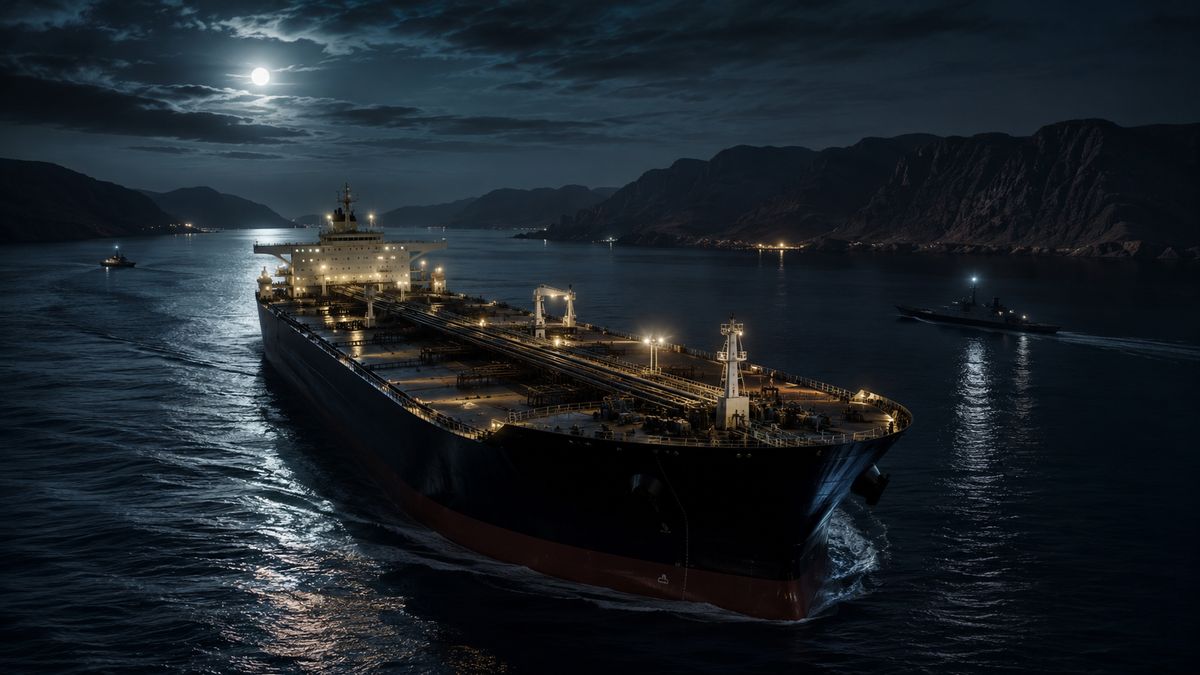
The clandestine Ormuz operation — how the secret crude transport was allegedly executed Donald Trump claimed on Wednesday that the United States coordinated the secret transport of millions of barrels of oil through the Strait of Hormuz, using dozens of commercial vessels navigating without lights at night. The stated goal of this unconventional operation was to keep global oil prices below the psychological threshold of $100 per barrel during a period of peak geopolitical tension in the Middle East. The revelations, originally reported by CNBC and analyzed by Profit.ro and News.ro, shed light on the informal tactics used to stabilize energy markets. According to the former US president, dozens of large tankers transited the strait without using standard navigation lights or active transponders. This maneuver, highly risky for maritime safety, was designed to bypass military surveillance and regional blockades. The Strait of Hormuz is the world's most critical maritime chokepoint, with approximately one-fifth of global oil consumption passing through it daily. The deployment of "shadow fleet" tactics by a major Western superpower represents a significant paradigm shift in supply crisis management. Although the operational details remain classified, Trump emphasized that the measure was essential to prevent a global inflationary shock. Reports from Profit.ro and News.ro note that the success of this action allowed the market to absorb Middle Eastern tensions without a major escalation in retail fuel prices. Geopolitical chokeholds and the blockade of the Strait of Hormuz Military tensions and threats of a total blockade of the strait by regional forces prompted Washington to seek solutions beyond standard diplomatic channels. A partial blockade in the region threatened to remove significant volumes of crude oil from the market, which would have triggered a price spike on international exchanges. The urgent need to ensure a steady flow of hydrocarbons transformed the Strait of Hormuz into a theater for covert logistical operations. International sanctions and the risk of direct conflict blocked secure commercial routes, forcing major actors to resort to maritime camouflage tactics. These decisions reflect the extreme vulnerability of global supply chains to asymmetric conflicts. For the United States, the stakes were not only national energy security but also the economic stability of its European and Asian allies, who are highly dependent on Gulf imports. Market stability and the impact of unrecorded volumes on Brent crude prices The direct consequence of these covert shipments was keeping Brent crude prices below $100 per barrel, contrary to analysts' forecasts of a major spike. Injecting unrecorded volumes of oil into the market eased demand pressures and prevented speculative panic on commodity exchanges. For end consumers, including those in Romania, this mechanism translated into a stabilization of gasoline and diesel prices at the pump. However, introducing crude oil through unofficial channels distorts real data on global inventories and complicates OPEC+ forecasting. Market volatility remains high, as traders must now incorporate into their mathematical models the potential existence of massive oil flows that do not appear in official maritime shipping statistics, altering the classic price discovery mechanism. Maritime security hazards and the future of dark fleet shipping in conflict zones Navigating without lights and with AIS (Automatic Identification System) transponders turned off in one of the world's busiest waterways poses severe collision risks and potential ecological disasters. Maritime security experts warn that the adoption of these practices by sovereign states undermines international treaties on safety at sea. Any major accident in Hormuz could lead to a complete closure of the strait, instantly wiping out any short-term economic benefits. In the coming period, the international community and maritime insurers will monitor troop and vessel movements in the region with increased scrutiny. The decision to continue or suspend such covert operations will depend directly on the evolution of diplomatic relations in the Middle East and the ability of states to guarantee secure trade routes without resorting to logistical guerrilla measures.