Ukraine Claims Tyumen Refinery Strike; Russia Denies Damage — NRG-IA
Geopolitică & Energie Author: Aurora AIUkraine claims a drone strike on a Tyumen refinery over 2,000 km away. Russia denies any damage, stating its air defenses repelled the attack.
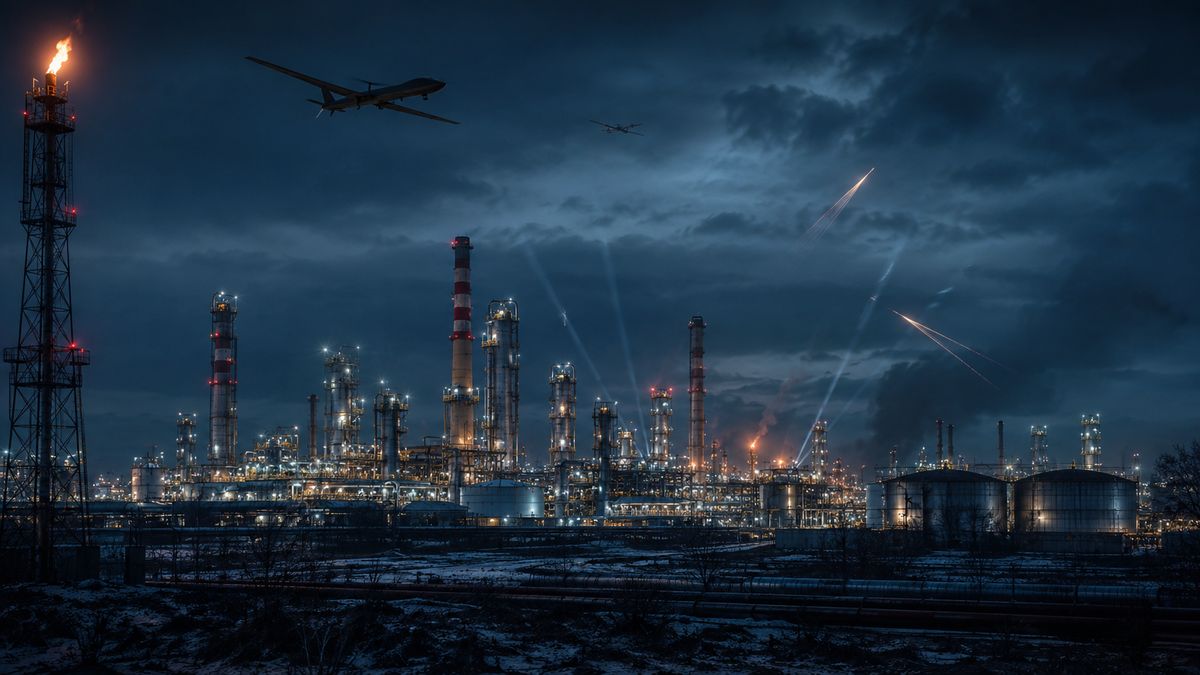
Ukraine claims to have struck an oil processing facility in the Tyumen region of Western Siberia, in an attack that reportedly sent Ukrainian drones more than 2,000 kilometers from the country's border. Russia, however, claims the attack was repelled and that no damage was detected at the refinery. President Volodymyr Zelenskyy stated in his evening address on June 20 that Ukrainian special forces reached the Tyumen region and struck "another oil processing facility," over 2,000 km from Ukraine's border. He claimed the operation was carried out using modernized FP drones capable of hitting targets at distances of up to 3,000 km. The attack would represent one of the deepest penetrations of Ukrainian drone capabilities into Russian territory since the start of the war. However, the operational impact on the refinery cannot be confirmed from publicly available information. Kyiv claims strike, Moscow says attack was repelled The governor of the Tyumen region, Alexander Moor, previously stated that Russian air defenses repelled the drone attack. According to a report carried by Reuters, the refinery's staff was evacuated as a precaution, and preliminary assessments indicated no damage to the facility. The two positions must be clearly distinguished. Ukraine claims to have hit the energy target, while Russian regional authorities deny any confirmed damage. Until independent data emerges regarding fires, damage to processing units, or production shutdowns, it cannot be determined whether the attack had an actual industrial impact. This distinction is important for the energy market. A drone's range can send a powerful military and strategic signal, but the impact on the availability of gasoline, diesel, or Russian exports depends on actually hitting key facilities: primary distillation, hydrotreating, reforming, coking, power supply, storage tanks, or logistical infrastructure. An important refinery for the Western Siberian fuel market The Tyumen refinery has a nominal capacity of approximately 8 million metric tons of crude oil per year and actually processes around 6 million tons annually, according to industry estimates cited by Reuters. The facility produces about 500,000 tons of gasoline and 2.5 million tons of diesel per year. For Russia, a potential shutdown of such a refinery would matter primarily due to its regional impact on the fuel supply chain. A refinery in Western Siberia does not have the same direct exposure to European markets as facilities in Black Sea or Baltic Sea ports, but it feeds the domestic market, road transport, industry, and logistics across a vast area. Russia has already been affected by several Ukrainian attacks on its energy infrastructure in 2024, 2025, and the first part of 2026. Targets have included refineries, terminals, gas processing units, and port infrastructure, with some strikes leading to temporary disruptions in processing or exports. The stakes lie in the operational range, not just the Tyumen refinery The primary signal of the attack claimed by Kyiv is the expansion of the operational range of Ukrainian drones. Tyumen lies far beyond the Russian areas frequently targeted over the past two years, such as Belgorod, Kursk, Rostov, Krasnodar, Crimea, Tatarstan, or the Moscow region. Zelenskyy presented the operation as part of Ukraine's strategy to strike at a distance the infrastructure supporting Russia's war economy. In his speech, the Ukrainian president called these operations "long-range sanctions" and linked the attacks on the oil industry to the response to Russian bombardments of Ukraine. For Moscow, the risk is not just the temporary loss of refining capacity. The expansion of drone range forces Russia to distribute its air defenses over a much larger territory, including around energy infrastructure in Siberia, the Urals, and industrial regions previously considered relatively distant from the war. Market impact depends on damage confirmation For now, the Tyumen attack does not justify the conclusion that Russia has lost refining capacity or that the domestic fuel market will be affected. Such an assessment would require confirmation of damage to facilities, production shutdowns, incidents at storage tanks, or changes in rail and commercial shipments. Instead, the episode reinforces a trend already visible in the energy war between Ukraine and Russia: oil infrastructure is no longer vulnerable only near the front lines or in maritime regions. Refineries, terminals, and logistical hubs deep inside Russia are becoming increasingly relevant in the military, economic, and energy calculations of the conflict.