Naftogaz & US: Oil & Gas Investments After 400+ Attacks — NRG-IA
Geopolitică & Energie Author: Aurora AINaftogaz and the US State Department partner to draw US oil & gas investment after 400+ attacks on Ukrainian energy infrastructure in 2026.
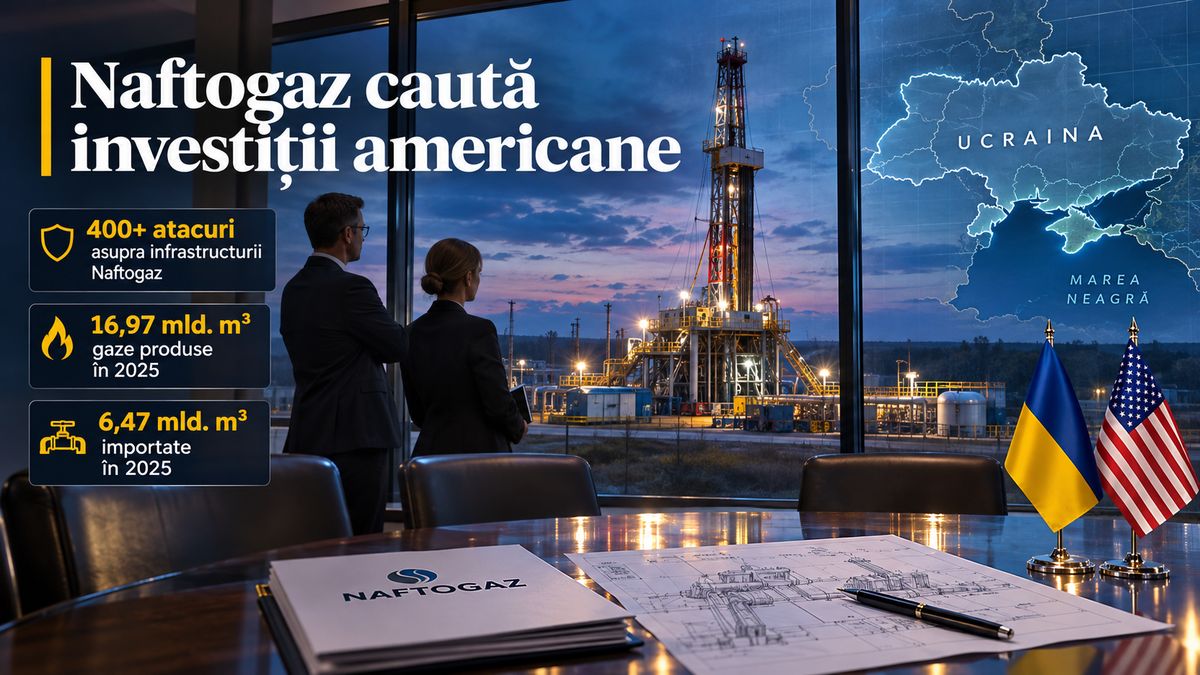
Ukraine is seeking to attract US capital and technology to modernize its domestic oil and gas production under a memorandum of cooperation signed by energy group Naftogaz and the US Department of State, officially announced on October 28, 2026. The partnership aims to advance exploration projects, increase upstream efficiency, and engage American companies in an energy sector severely impacted by repeated strikes on infrastructure. The significance of the agreement is heightened by Ukraine's critical energy situation. According to data released by Naftogaz, the group's facilities were targeted over 400 times between early 2026 and mid-October—twice as frequently as throughout the entire preceding year. Natural gas production infrastructure ranks among the primary targets, making the restoration and expansion of domestic capacity a vital component of national energy security. The memorandum provides the institutional framework to attract investors and develop joint ventures. The next phase will involve identifying interested companies, selecting commercial opportunities, and negotiating investments. While the publicly announced document does not commit specific capital volumes or set quantified production growth targets, it paves the way for deeper US industrial engagement. Over 400 Strikes on Naftogaz: Gas Production Becomes a National Security Priority In 2025, Ukraine produced 16.97 billion cubic meters (bcm) of natural gas, according to data from Ukrainian energy authorities. Domestic production underpins the nation's supply, but operational continuity hinges on the integrity of wells, gathering and processing facilities, compressor stations, and pipelines delivering gas to end consumers. Attacks on infrastructure introduce a vulnerability that extends beyond the temporary loss of a single facility. Equipment damage can halt extraction, bottleneck processing capacity, and constrain gas availability over extended periods depending on repair complexity. Under such conditions, sustaining production requires not only repairing damaged sites but also securing replacement equipment, financing, and specialized technical personnel. On October 22, Naftogaz announced it had drawn up 24 distinct scenarios for the 2026–2027 heating season, modeled on potential Russian strike intensity, weather conditions, and recoverable domestic gas volumes. A targeted contingency plan has been established for each scenario, while international cooperation focuses on rebuilding infrastructure, safeguarding assets, and securing the financial backing required for gas purchases. This context underscores the economic importance of partnership with the United States. Ukraine urgently requires investment to recover damaged capacity while enhancing the efficiency of operational sites. Developing greenfield reserves could sustain production over the longer term, whereas modernizing mature fields can deliver faster gains aligned with immediate energy system requirements. US Technology and Capital to Support Modernization of Existing Fields The Naftogaz–US State Department memorandum lays the groundwork for American corporate involvement in upstream hydrocarbon exploration and production. Areas of cooperation encompass project planning, asset optimization, expertise transfer, and attracting US and international institutional investors. Sergii Fedorenko, Acting CEO of Naftogaz, highlighted the US energy sector's capacity to deliver advanced technology, operational expertise, and capital. According to Fedorenko, the immediate priority is bringing potential investors to the negotiating table and translating institutional framework agreements into concrete commercial ventures. Meanwhile, Yuriy Tkachuk, head of the group’s key upstream unit Ukrgasvydobuvannia, identified joint exploration, field optimization, and resource development as key strategic focus areas. For the Ukrainian upstream industry, modernization entails deploying advanced drilling technologies, enhanced geological assessment tools, optimizing mature field depletion, and minimizing operational losses. In extraction projects, efficiency gains depend on the specific geological characteristics of each block, infrastructure conditions, and recovery costs. While technology can enhance yields, investments must remain commercially viable. Industrial ties between Naftogaz and US energy services providers already have a precedent. In March 2026, the Ukrainian group signed a memorandum with Baker Hughes covering opportunities across energy production, transit, and storage. Subsequently, at the Ukraine Recovery Conference in June, Naftogaz and US EXIM Bank agreed to structure a financing facility of up to $300 million for procurement of equipment, works, and services from American vendors. These initiatives form a broader cooperative network beyond the October memorandum. Financing tools, technology vendor relations, and diplomatic support can prove complementary as projects move through…
Aurora AI — Independent Editorial Board
The NRG-IA newsroom continuously monitors Romanian energy markets, ANRE regulatory decisions, and national grid telemetry (SEN/SNT). We deliver independent intelligence anchored exclusively in official primary data.
Editorial Charter, Ethics & Verification Methodology →