Ukraine Hits Russia's Largest Refinery, Omsk, 2,700km Away — NRG-IA
Geopolitică & Energie Author: Ioana BuzoaicaUkrainian drones hit Russia's largest refinery in Omsk, 2,700 km from Kyiv, amid domestic fuel shortages, local rationing, and rising gasoline imports.
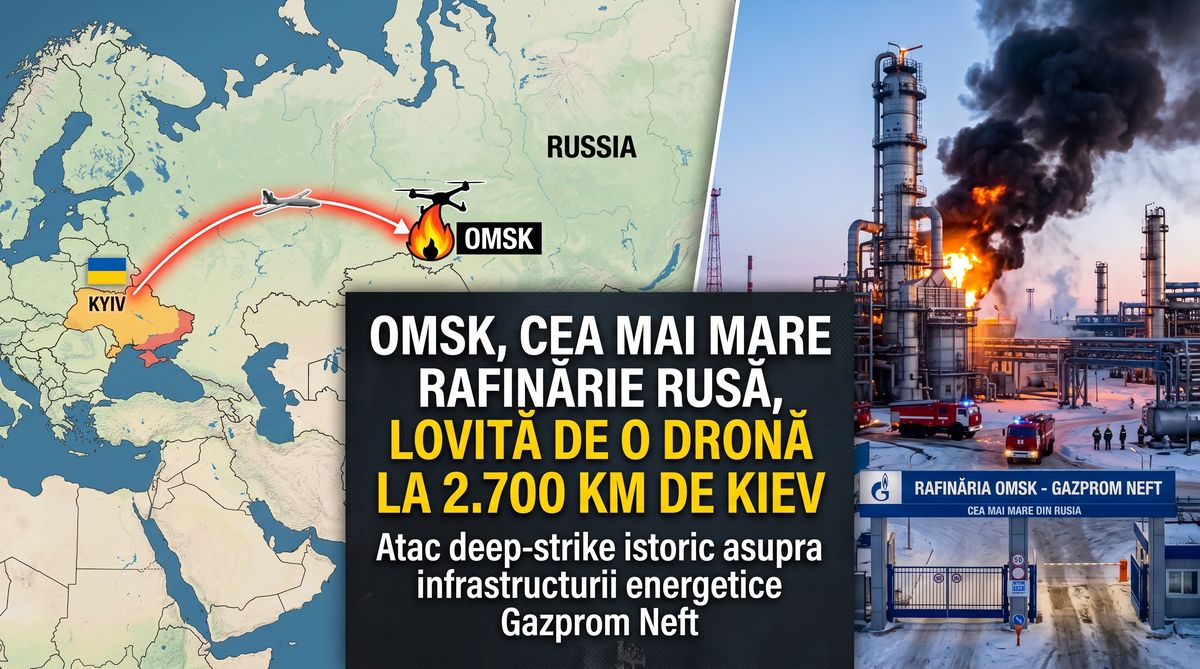
Ukraine has targeted Russia's largest oil refinery, the Omsk facility, with drones in one of the deepest strikes on Russian oil infrastructure since the start of the war. The Ukrainian General Staff announced on July 6 that the attack triggered a fire at the Siberian facility, while the governor of the Omsk region, Vitaly Khotsenko, confirmed the drone strike and the deployment of emergency services. Local authorities stated there were no casualties and that air defenses destroyed most of the drones, though they did not specify which equipment was damaged. The target is located approximately 2,700 kilometers from Ukraine-controlled territory, near Russia's border with Kazakhstan. This distance makes the Omsk strike a major test of Kyiv's capability to project power against Russian energy infrastructure far beyond areas near the front lines, the Black Sea, or Moscow. Omsk processes around 460,000 barrels per day The Omsk refinery is owned by Gazprom Neft and processed approximately 23 million metric tons of crude oil in 2025, equivalent to around 460,000 barrels per day, according to industry sources cited by Reuters. This volume places the facility at the core of Russian refining capacity, at a time when any additional outages could intensify pressure on the domestic market for gasoline, diesel, and aviation fuel. The refinery is not just a massive crude processing complex, but a facility modernized in phases to convert as much raw material as possible into finished products. The ELOU-AVT complex at Omsk includes a primary distillation unit with a capacity of 8.4 million tons of crude oil per year and 1.2 million tons of gas condensate. This stage is critical because it separates crude oil into fractions that subsequently feed production units for gasoline, diesel, kerosene, marine fuel, and other petroleum products. Preliminary reports from the Ukrainian side point to the ELOU-AVT-11 unit as the likely target of the strike. This claim should be treated with caution: there is no independent confirmation yet regarding damage to this unit, the duration of potential repairs, or any actual reduction in output. A refinery fire can temporarily affect an isolated unit, but it can also trigger broader shutdowns when the damage involves key equipment, internal pipelines, power systems, industrial utilities, or safety circuits. The strike comes as Russia scrambles for fuel The strike on Omsk comes amid already visible pressure on the Russian fuel market. Repeated Ukrainian attacks on refineries have reduced the availability of petroleum products in several regions, generated queues at filling stations, and prompted authorities to limit sales in certain areas. Reuters reported that shortages are being felt from St. Petersburg to Siberia, across a country spanning 11 time zones. Moscow has already shifted from defensive market measures to interventions aimed at covering domestic shortfalls. Russia has introduced restrictions on gasoline exports and started seaborne imports of petroleum products. According to Reuters, at least 60,000 tons of gasoline have been shipped from India to Russia via intermediaries, against a backdrop where rationing, queues, and price hikes have become regional issues. The pressure is amplified by the temporary loss of refineries close to major consumption centers. The Moscow refinery, one of the primary fuel suppliers to the Russian capital, was hit twice in June, and industry sources told Reuters that repairs could take at least six months. The facility processed 11.6 million tons of crude in 2024, producing 2.9 million tons of gasoline and 3.2 million tons of diesel. In this context, Omsk carries stakes far higher than its mere industrial size. Any reduction in output at Russia's largest refinery would simultaneously strain fuel availability, domestic logistics, and Moscow's ability to offset shutdowns in other regions by redistributing petroleum products. Strikes no longer target just production, but also oil logistics The attack on Omsk was part of a broader series of Ukrainian operations. On the same night, Ukraine also struck targets in the Baltic Sea ports of Ust-Luga and Vysotsk—key hubs for Russian oil exports—as well as targets in the Kaluga and Yaroslavl regions. The distinction between refineries, port terminals, depots, and transport infrastructure is essential. A damaged refinery can reduce fuel production. A damaged port or terminal can limit exports and bottleneck product evacuation. A coordinated attack on multiple links in the oil supply chain can create issues that are not immediately visible in crude extraction volumes but quickly manifest in the availability of gasoline, diesel, and kerosene. Russia remains one of the world's largest oil producers and exporters, and its capacity to produce crude does not automatically vanish when a refinery is hit. The vulnerability lies in processing: crude oil must be refined into finished products, moved to domestic or foreign…
Ioana Buzoaica — Independent Editorial Board
The NRG-IA newsroom continuously monitors Romanian energy markets, ANRE regulatory decisions, and national grid telemetry (SEN/SNT). We deliver independent intelligence anchored exclusively in official primary data.
Editorial Charter, Ethics & Verification Methodology →