Moscow Refinery Hit: Russian Refining Hits 20-Year Low — NRG-IA
Geopolitică & Energie Author: Ioana BuzoaicaA new drone strike hit the Moscow Refinery, part of a campaign squeezing Russian refining capacity amid an already tight global diesel market.
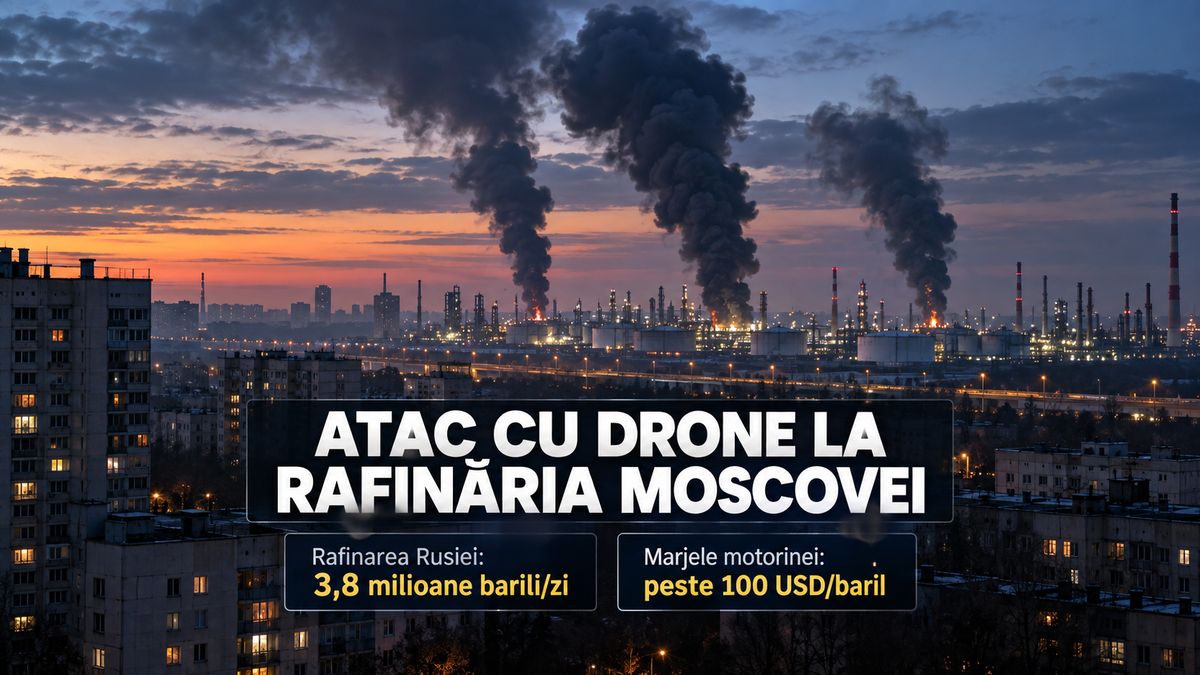
The Moscow Refinery, one of the most critical oil facilities serving the Russian capital, was hit once again during a massive drone attack overnight on September 19-20. Moscow Mayor Sergey Sobyanin announced that a facility on the refinery's premises was damaged, with no casualties reported, as emergency services were dispatched to the scene. Russian authorities attributed the attack to Ukraine, which had not publicly claimed responsibility for the operation at the time of writing. Confirmed information remains limited for now. There is no solid data yet regarding the specific unit affected or any additional impact on processing capacity. This distinction is crucial, as the Gazprom Neft-operated refinery had already been severely damaged in June and was reported to be offline for at least six months. However, the new strike carries broader significance than the localized damage at Kapotnya. It comes at a time when the campaign against Russian refineries has expanded sufficiently to disrupt both Russia's domestic fuel supply and the balance of an international diesel market already operating on a thin margin of safety. The Moscow Refinery was already offline following the June attacks The facility in southeastern Moscow has a capacity of approximately 250,000 barrels per day. In 2024, it processed 11.6 million tonnes of crude oil, producing significant volumes of gasoline and diesel for the capital region. Strikes on June 16 and 18 successively hit the refinery's two main primary processing lines. The first damaged the unit representing over half of the refinery's capacity, while the second strike affected the Euro+ facility—which handled most of the remaining processing—along with secondary units, pipelines, auxiliary systems, and storage tanks. Reuters later reported, citing industry sources, that the extent of the damage made it unlikely for the refinery to return to production before the end of the year. The IEA updated its assessment on September 17, indicating that the facility is now reported offline until early 2027. This situation changes the significance of the September 20 attack. Damage to another facility on-site could disrupt repairs, auxiliary infrastructure, storage, or other equipment, but any additional impact on crude processing volumes depends on the exact identification of the unit hit. The refinery's primary capacity was already offline. Attacks have pushed Russian refining to a more than 20-year low The situation in Moscow is part of a much broader campaign. Russia has 32 major refineries with approximately 6.5 million barrels per day of installed processing capacity, historically placing it third globally in refined petroleum product output, behind the United States and China. In the first eight months of 2026, according to the IEA, a Russian refinery was hit on average once every three days. By late August, only five of the 32 major refineries had not yet been struck by drones, all of them located in Eastern Siberia or the Far East. The cumulative effect is visible in production. In June, the volume of crude processed by Russian refineries fell to 3.8 million barrels per day , the lowest level in over 20 years and approximately 30% below the level of the same period in the previous year. Reported gasoline production was about 20% lower than in 2025, while estimated diesel output had dropped by nearly 30%. The strikes no longer target only storage tanks or relatively easy-to-repair facilities. The IEA notes that complex secondary units—equipment that converts intermediate products into gasoline, jet fuel, and commercial-grade diesel—have been increasingly targeted. Repairing a moderately damaged primary unit can take one to two weeks; however, for severely affected secondary equipment, the timeline can stretch to six to eight months. This mechanism turns the frequency of attacks into a cumulative problem: a refinery repaired after one strike may later lose another critical unit, with the required maintenance and equipment backlog accumulating faster than capacity can be brought back online. Pressure on Russia is transmitted to the global market through diesel The international impact does not primarily stem from the loss of Russian crude, but rather from the reduction in refined product volumes. An offline refinery leaves more crude oil available but produces less gasoline, diesel, and jet fuel. Diesel has become the tightest segment. Global seaborne diesel and gasoil exports averaged approximately 4.7 million barrels per day in the first eight months of 2026, 10% below the level of the same period in the previous year . In August, combined diesel exports from Russia and the Middle East dropped to around 520,000 barrels per day, 75% less than a year earlier . Increased shipments from the United States and a recovery in Asian exports only partially offset the shortfall. The result is evident in refining economics. In September, the diesel crack spread—the difference between the value…