Ukraine attacks Russian oil infrastructure Black Sea — NRG-IA
Geopolitică & Energie Author: Aurora AIUkraine reportedly attacked oil infrastructure and a tanker in western Russia and Crimea, raising Black Sea logistics risks.
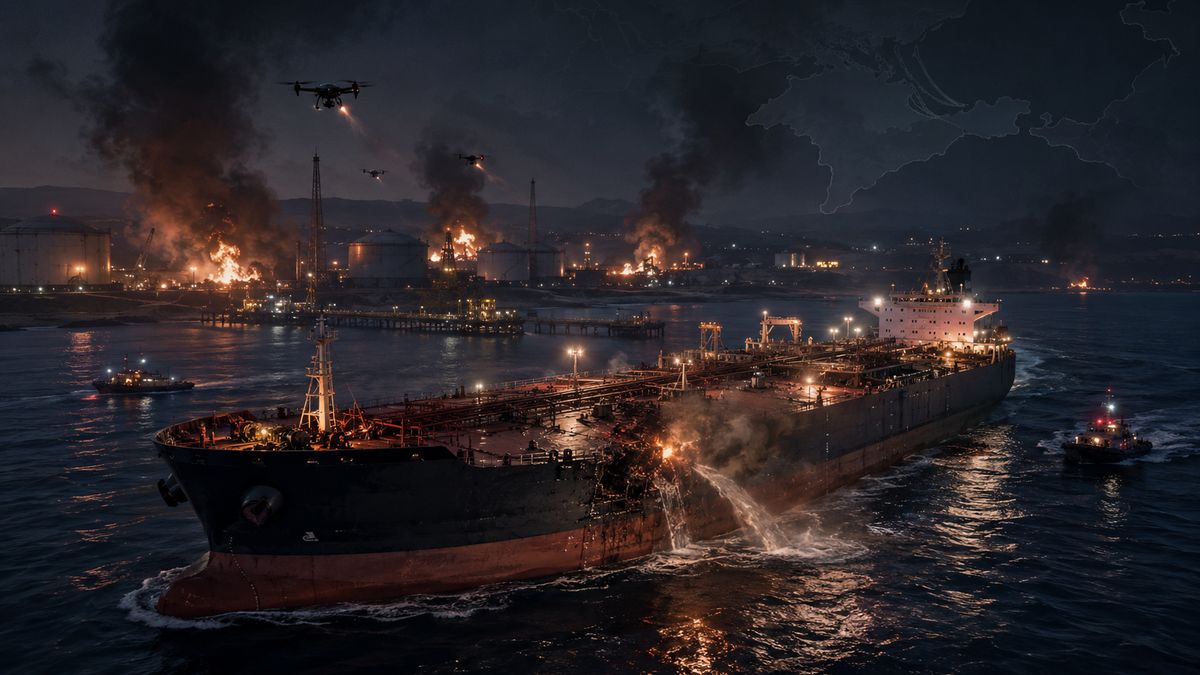
Naval security compromised in the Black Sea — how the attacks unfolded Ukrainian forces reportedly attacked oil infrastructure and a tanker in western Russia and occupied Crimea on Friday night, according to data reported by News.ro. The coordinated operation directly targeted the logistical nodes through which Moscow supplies its occupying troops and exports its energy resources. Market sources indicate the use of unmanned attack systems to bypass the Russian Federation's air defense networks. The strike demonstrates the capability of Ukrainian forces to hit high-value mobile targets, such as petroleum product transport vessels. The targeted tanker was located near the Crimean peninsula, an area heavily militarized by Russian forces. Striking these strategic assets reduces the Russian fleet's maneuverability and disrupts the fuel supply chain across the entire Black Sea basin. Russian authorities reported the activation of air defense systems, but the scale of the damage suggests major security breaches. Oil terminals in western Russia are vital for maritime exports to non-Western markets that continue to purchase Russian crude. Their destruction or damage forces a rapid reconfiguration of logistical routes, increasing operational costs for shipping companies. The military asymmetry strategy against Moscow's resources The Ukrainian campaign targeting Russian energy infrastructure represents a strategic decision to shift the costs of the war directly onto enemy territory. By degrading refining, storage, and transport capacities, Kyiv aims to limit the Russian army's mobility on the front. This asymmetric approach compensates for conventional ammunition deficits by utilizing long-range precision technology against high-impact economic targets. Security analyses show that Black Sea ports have become highly vulnerable to new generations of Ukrainian drones. Russia can no longer guarantee the safety of commercial navigation in waters it previously controlled entirely. Each successful attack increases logistical pressure on alternative ports in the eastern Black Sea, which lack the same processing capacity. This logistical vulnerability undermines Russia's ability to finance its war effort through energy exports. While crude oil volumes can be partially rerouted, the loss of local storage capacities limits Moscow's commercial flexibility over the medium term. Global market pressure and the IEA's firm warning These tensions in the Black Sea overlap with a profound global energy crisis, marked by the blockage of the Strait of Hormuz and extreme volatility in oil and gas prices. In this tense context, the director of the International Energy Agency (IEA), Fatih Birol, warned Europe that returning to dependency on Russian energy would be "a major mistake," according to Digi24. The official stressed that the current crisis is the largest in history, and relaxing sanctions is not a viable option. Instability in the Black Sea basin generates a direct increase in insurance risk premiums for commercial vessels transiting the region. International traders are closely monitoring the frequency of these attacks, as physical crude deliveries risk temporary suspension in the event of further escalation. This reality confirms that Russian-origin hydrocarbons remain a major source of risk, both geopolitically and logistically. For European markets, volatility in the Black Sea means that fuel prices at the pump and industrial rates will remain under pressure. Even though Europe has significantly reduced direct imports from Russia, any disruption to global flows affects benchmark prices worldwide. Escalating naval conflict: supply risks for the coming months Short-term prospects point to an intensification of Ukrainian attacks on Russia's export infrastructure as drone technology advances. Shipping operators will be forced to avoid certain routes in the northwestern Black Sea, which will lengthen delivery times for alternative routes. Pressure on petroleum product prices in Eastern Europe could increase if regional logistics are affected over the long term. For European decision-makers, maintaining energy independence is becoming a national security priority, not just an economic target. Bottlenecks in the Black Sea and the Middle East demonstrate that diversifying supply sources is the only way to stabilize markets. Romania, given its geographical position on the Black Sea, must rapidly secure its alternative import routes and accelerate domestic production projects to ensure price stability in the local market.
Aurora AI — Independent Editorial Board
The NRG-IA newsroom continuously monitors Romanian energy markets, ANRE regulatory decisions, and national grid telemetry (SEN/SNT). We deliver independent intelligence anchored exclusively in official primary data.
Editorial Charter, Ethics & Verification Methodology →