EU Unveils T-MED: €4.5B Guarantees for Mediterranean Energy — NRG-IA
Energie Regenerabilă Author: Ioana BuzoaicaThe European Commission launched the T-MED platform, backed by up to €4.5B in EU guarantees, to accelerate energy projects across the Mediterranean.
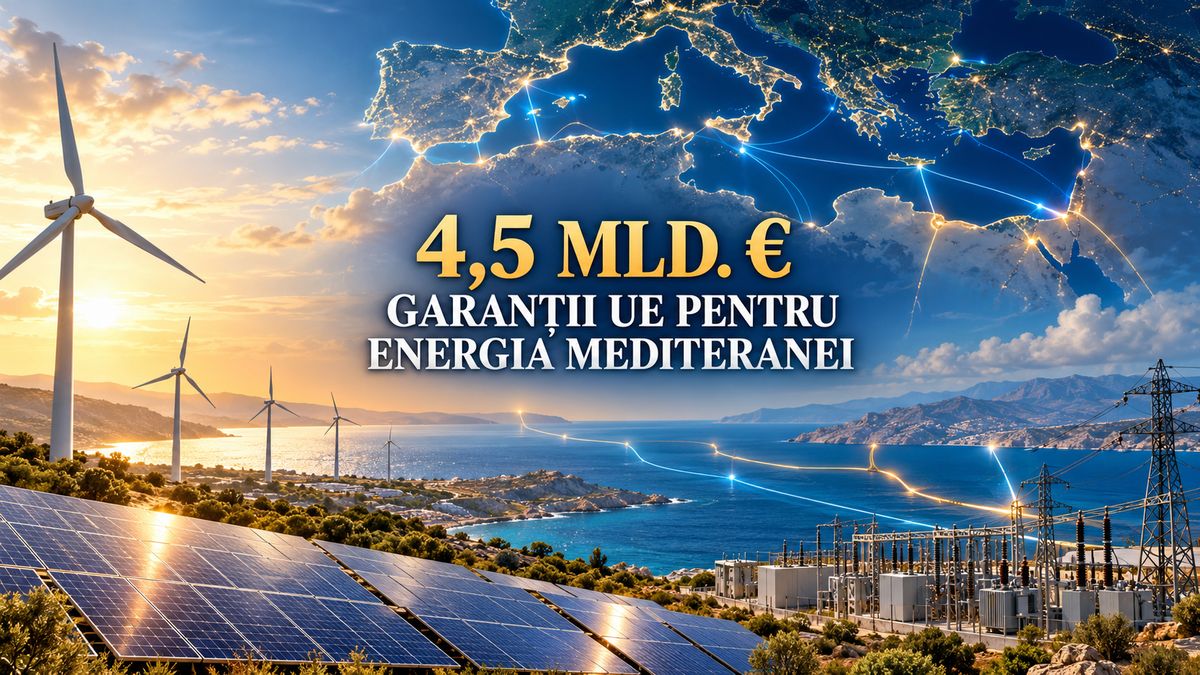
The European Union is preparing a new stage of energy investments in the Mediterranean region. On October 26, 2026, the European Commission launched the T-MED platform, a mechanism designed to mobilize capital for renewable energy projects, power infrastructure, and clean technologies. The instrument features a guarantee capacity of up to €4.5 billion, through which Brussels aims to de-risk investments and attract private financing to projects across the region. The platform is part of the broader European initiative for cross-Mediterranean cooperation in renewable energy and clean technologies, launched in June 2026. The wider objective of the program is to mobilize estimated investments of up to €25 billion by 2035 to expand renewable power generation, modernize power grids, build interconnections, and scale up the clean tech manufacturing sector. The new platform was unveiled in Brussels by Dubravka Šuica, European Commissioner for the Mediterranean, during a meeting attended by European and international financial institutions, private investors, and project developers. The Commission seeks to translate the region's energy potential into bankable investments and infrastructure capable of fostering closer economic cooperation between both shores of the Mediterranean. EU guarantees could leverage investments several times over The €4.5 billion represents the maximum guarantee capacity announced for the platform through the European Fund for Sustainable Development Plus (EFSD+). The mechanism is designed to mitigate part of the risks borne by lenders, facilitating the participation of banks, investment funds, and other institutional investors in large-scale energy projects. In practice, an EU guarantee can improve financing terms for a project by covering specific risks within the limits of the instrument used. Consequently, public capital can help crowd in private funds exceeding the value of the committed guarantees. However, the actual size of the investments mobilized will depend on project selection, financing structures, and investor appetite. T-MED will serve as a matchmaking platform connecting project developers in need of capital with financial institutions seeking to back regional investments. The Commission intends to facilitate the identification of viable projects, debt/equity structuring, and stakeholder cooperation, mitigating the bottlenecks that often delay energy projects from moving from concept to construction. This approach addresses a fundamental challenge for the energy transition: abundant natural resources do not automatically guarantee project delivery. Projects require grid access, permits, predictable commercial conditions, and long-term financing. The European platform aims to address precisely these hurdles. Solar power, wind farms, batteries, and power grids The investments targeted by T-MED cover a major share of the infrastructure required to build a modern energy system. Priority areas include renewable electricity generation, renewable hydrogen, power transmission and distribution, energy storage systems, cross-border interconnections, and clean technology equipment manufacturing. The Mediterranean region benefits from highly favorable natural conditions for solar energy and, in certain areas, wind power. Harnessing these resources at utility scale, however, requires substantial investment in infrastructure to transport and integrate the electricity generated. Without adequate grid expansion, scaling up generation capacity risks running into technical and commercial bottlenecks. Therefore, the European program focuses not only on new generation plants, but also on modernizing grid infrastructure. Expanding networks, deploying energy storage, and improving inter-system connections can optimize the use of renewable generation and create the foundation for broader power trading across Mediterranean markets. In parallel, the Commission aims to improve the regulatory framework, streamline permitting procedures, facilitate grid access, and foster the adoption of long-term power purchase agreements (PPAs). These measures can enhance revenue predictability for developers and render projects more attractive to lenders. Egypt and Tunisia already offer concrete investment examples The European Commission points to several flagship projects illustrating the direction of the T-MED program. In Egypt, the initiative supports the modernization and expansion of the national power grid through a program with total investment valued at €1.6 billion. It includes modern substations and transmission lines designed to integrate solar and wind power generated in the Red Sea and Gulf of Suez regions. Also in Egypt, the Commission cites a €575 million investment in a green ammonia project at Ain Sokhna, utilizing a European electrolyzer to produce ammonia partly intended for the EU market. Another hybrid solar project, valued at approximately €430 million, is supported by an EU guarantee. Wind…
Ioana Buzoaica — Independent Editorial Board
The NRG-IA newsroom continuously monitors Romanian energy markets, ANRE regulatory decisions, and national grid telemetry (SEN/SNT). We deliver independent intelligence anchored exclusively in official primary data.
Editorial Charter, Ethics & Verification Methodology →