EU Enters Winter with Gas Storage at 70% — NRG-IA
Geopolitică & Energie Author: Ioana BuzoaicaThe EU approaches winter with gas storage at 70%, 12% below last year. Commissioner Jørgensen urges demand cuts, though supply remains stable.
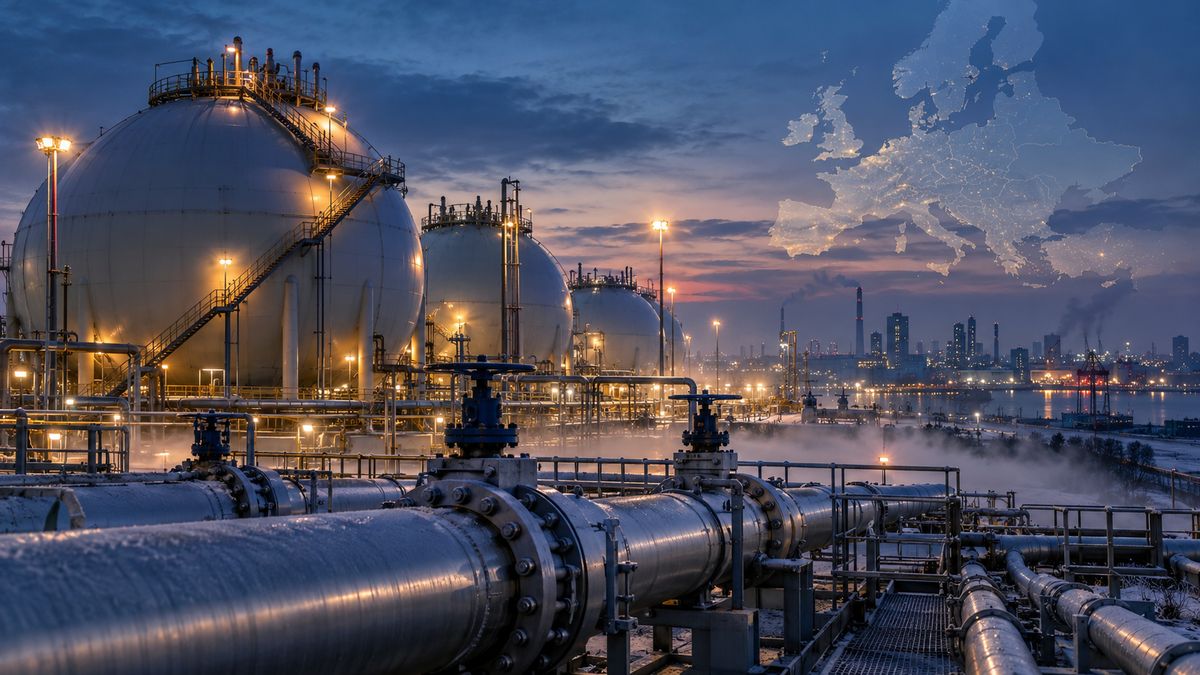
The European Union is entering the final stage of winter preparations with gas storage facilities approximately 70% full and an energy market once again highly exposed to geopolitical tensions. In a letter sent to member states' energy ministers, European Commissioner Dan Jørgensen warns that the EU is facing "a price crisis linked to a supply crisis" and urges governments to consider continuing measures that support gas storage or reduce demand for gas and electricity. The message is strong, but its meaning must be precisely contextualized. Europe is not currently experiencing a physical gas shortage. On September 25, the European Commission and member states reconfirmed within the Gas Coordination Group that the EU's supply remains stable, even though storage levels are lower than in previous years. European rules for protected customers—primarily households and essential services—remain active for situations of severe disruption. Europe Has Gas, but Buys It in a Much More Tense Market The current issue is the gap between physical availability and cost. Europe continues to receive gas, but does so in an environment where competition for supply is higher, energy routes are affected by the war in Iran, and storage levels leave less margin than in previous years. Data cited in Jørgensen's letter shows that EU storage is approximately 70% full, about 12 percentage points below the same period in 2025. For an energy system where stored gas covers a significant portion of additional consumption during the cold season, this difference is highly relevant ahead of high-demand heating months. However, the Commission believes Europe is better prepared than during the 2021–2022 energy crisis. Liquefied natural gas (LNG) import capacity has increased, gas consumption has decreased, renewables hold a larger share, and suppliers have been diversified. On September 3, the Gas Coordination Group noted that the European system remains resilient enough to manage lower storage levels under current conditions. It is precisely this combination that explains the apparent contradiction between Brussels' two messages: supply is stable, but the prices and conditions under which Europe secures its energy justify additional precautionary measures. Jørgensen Puts Demand Reduction Back at the Center of Winter Preparations The Commissioner's letter does not impose a new mandatory consumption reduction target on member states. Jørgensen invites them to analyze or maintain measures that can allow continued gas injections into storage or reduce demand for gas and electricity for as long as necessary. The logic is both economic and physical. Every unit of gas not consumed today can reduce the need for purchases in an expensive market or remain available for the winter months. Reducing electricity demand can have the same effect when marginal electricity generation comes from gas-fired power plants. Examples cited from the letter include limiting temperatures in public buildings, restricting outdoor heating, and reducing non-essential public lighting. These are measures that states can calibrate individually, rather than a new mandatory European regime imposed on consumers. The mechanism targeted by the Commission is to avoid a situation where multiple states simultaneously attempt to purchase large volumes of gas within a short timeframe, pushing prices even higher. The War in Iran Hits Europe Primarily Through Prices Europe remains one of the world's largest energy importers and is directly exposed to external shocks. Approximately 80% of the EU's gas needs are met by external suppliers, according to data cited by Reuters in its report on Jørgensen's letter. The war in Iran has heavily altered the economics of energy transit through the Middle East. Oil flows through the Strait of Hormuz have recovered a significant portion of their initial decline, but traffic remains below normal, and shipping and insurance costs have risen. For liquefied natural gas, the constraints are even more significant, as the logistics chain is less flexible than for oil. The effect is already visible in Europe's energy bill. In the second quarter of 2026, the value of EU crude oil imports rose by 55.8% compared to the 2025 monthly average, while the imported volume increased by only 1.2% , to 36.7 million tonnes. Europe bought nearly the same amount of oil but paid significantly more for it. For LNG, the value of imports rose by 4.1%, even though the volume decreased by 5.6%. The United States supplied 63.2% of European LNG imports in the second quarter, highlighting how much the structure of European supply has shifted following the reduction in Russian deliveries. Storage Has Become Both a Security Tool and a Source of Price Pressure Following the 2022 crisis, the European Union turned gas storage into a core component of energy security. Underground storage facilities can provide about 30% of European gas consumption during the winter months, making their…
Ioana Buzoaica — Independent Editorial Board
The NRG-IA newsroom continuously monitors Romanian energy markets, ANRE regulatory decisions, and national grid telemetry (SEN/SNT). We deliver independent intelligence anchored exclusively in official primary data.
Editorial Charter, Ethics & Verification Methodology →