Tanker Damaged in Hormuz: US Strikes Iran After M/T Kiku — NRG-IA
Geopolitică & Energie Author: Ioana BuzoaicaA tanker was damaged in the Strait of Hormuz, renewing risks for oil and LNG transit through the world's most sensitive energy corridor.
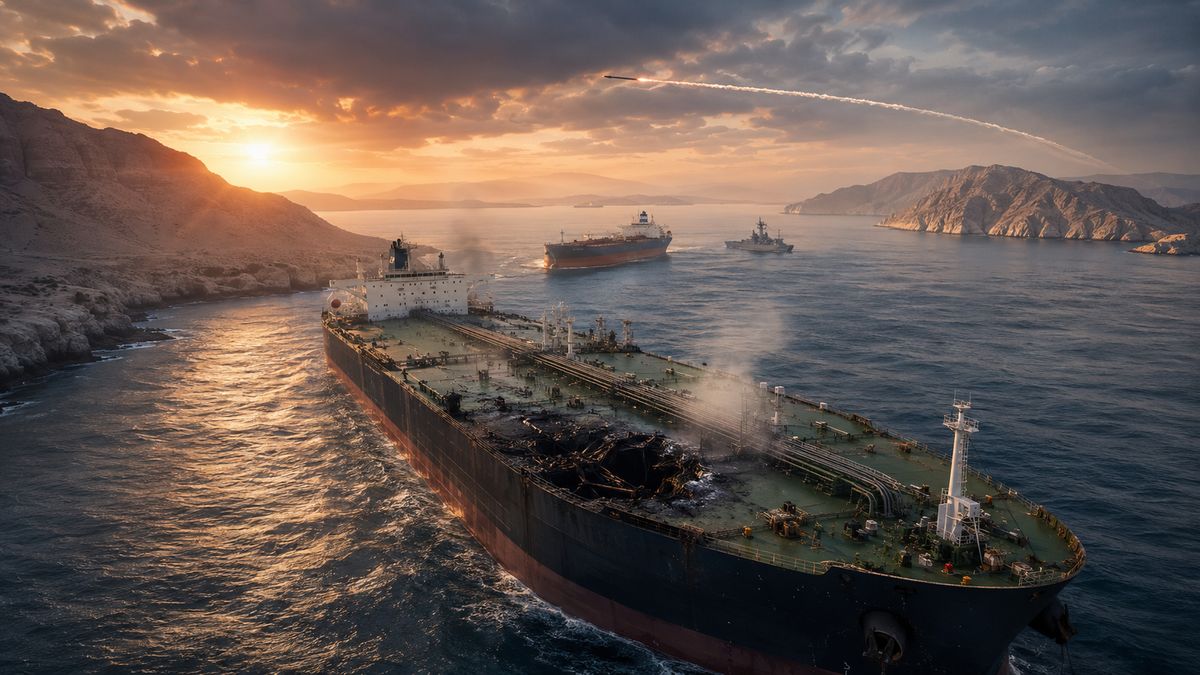
An oil tanker was hit by an unidentified projectile in the Strait of Hormuz on Saturday, June 27, damaging the vessel's deck. The United Kingdom Maritime Trade Operations (UKMTO), the British maritime security monitoring center, reported that the entire crew is safe and that, at the time of the alert, there was no reported pollution or other environmental impact. The incident comes at a time when the corridor between the Persian Gulf and the Gulf of Oman was beginning to gradually resume commercial traffic, following months of tensions, mines, shipping restrictions, and attacks on vessels. However, the strike on a commercial ship shifts the underlying issue once again: it is not enough for vessels to be formally allowed through Hormuz; shipowners, insurers, and traders must believe that the transit is predictable and safe. M/T Kiku, the New Escalation Point US Central Command (CENTCOM) identified the tanker as the Panama-flagged M/T Kiku and claimed the vessel was carrying over two million barrels of crude oil when it was struck by an attack drone launched from Iran. CENTCOM states that the incident occurred near the Strait of Hormuz and triggered a new round of US strikes against Iranian military targets. However, the attribution of the attack to Iran comes from US military authorities. The UKMTO alert, based on the ship master's report, only confirms that the tanker was hit by an unidentified projectile and sustained deck damage. This distinction matters: the maritime incident is confirmed, while direct responsibility remains part of the information and military confrontation between Washington and Tehran. CENTCOM announced that it struck Iranian surveillance infrastructure, communication systems, air defense positions, drone facilities, and mine-laying capabilities. The US military message is clear: attacks on commercial shipping will receive a direct response, including strikes on infrastructure that can threaten maritime transit. Second Attack on Commercial Shipping in Three Days The attack on the M/T Kiku follows Thursday's incident, when the Singapore-flagged commercial vessel M/V Ever Lovely was hit while exiting the Strait of Hormuz near the coast of Oman. CENTCOM also attributed that attack to an Iranian drone and launched strikes on June 26 against missile and drone depots, as well as Iranian coastal radars. Consequently, the escalation is no longer just about political negotiations between the US and Iran. It is shifting back to the arena where the oil risk premium is shaped: the physical safety of vessels, access to shipping corridors, the availability of military escorts, and the cost of insurance for transporting crude oil, petroleum products, and LNG. Tehran has not directly or publicly claimed responsibility for the attack on the tanker. However, Iranian state media reported warning shots fired at vessels that allegedly failed to respect transit channels approved by Iran. In parallel, Iranian authorities maintain that their strikes against US-associated targets represent a defensive response to American attacks. Reuters notes that each side accuses the other of violating the interim ceasefire agreement. Hormuz is Not Closed, But It is Not Yet a Normal Route The most critical distinction for the market is between a complete closure of the strait and a corridor that is formally open but insufficiently safe for normal traffic. Prior to Saturday's incident, the Joint Maritime Information Center indicated that commercial traffic had increased, with vessels utilizing both the southern corridor, controlled by Oman, and the northern route, under Iranian control. At the same time, the warning maintained the risk of mines, navigation interference, and surveillance activity by the Revolutionary Guards. CENTCOM maintains that commercial transit through the Strait of Hormuz continues. This means there is currently no confirmation of a total closure of the route. However, the attack on a tanker shifts the risk into a much more difficult-to-manage territory: vessels can navigate, but the cost and danger of a crossing rise immediately when there is the possibility of a direct attack on commercial cargo ships. Before the conflict, approximately one-fifth of global oil and LNG flows transited through Hormuz. After months of disruptions, the gradual exit of vessels stranded in the Gulf had contributed to a roughly 3% drop in oil prices on Friday, prior to the new escalation. On Monday, markets will assess not only the number of vessels crossing the area but also whether maritime operators are willing to accept the risk again without additional restrictions, excessive insurance premiums, or delays. The Stakes for Oil, LNG, and Romania For oil, the attack does not automatically trigger a supply shock. A single damaged tanker does not mean a physical blockage of the strait, nor does it halt exports from the Gulf. The impact becomes material for the market if attacks recur, if shipowners suspend transits, or if…
Ioana Buzoaica — Independent Editorial Board
The NRG-IA newsroom continuously monitors Romanian energy markets, ANRE regulatory decisions, and national grid telemetry (SEN/SNT). We deliver independent intelligence anchored exclusively in official primary data.
Editorial Charter, Ethics & Verification Methodology →