Romania Fuel Prices: Standard Diesel Reaches 9.54 Lei — NRG-IA
Piața de Energie Author: Ioana BuzoaicaPremium diesel has topped 10 lei, but standard diesel drives economic pressure. July's hike combines full excise duties with tight global fuel markets.
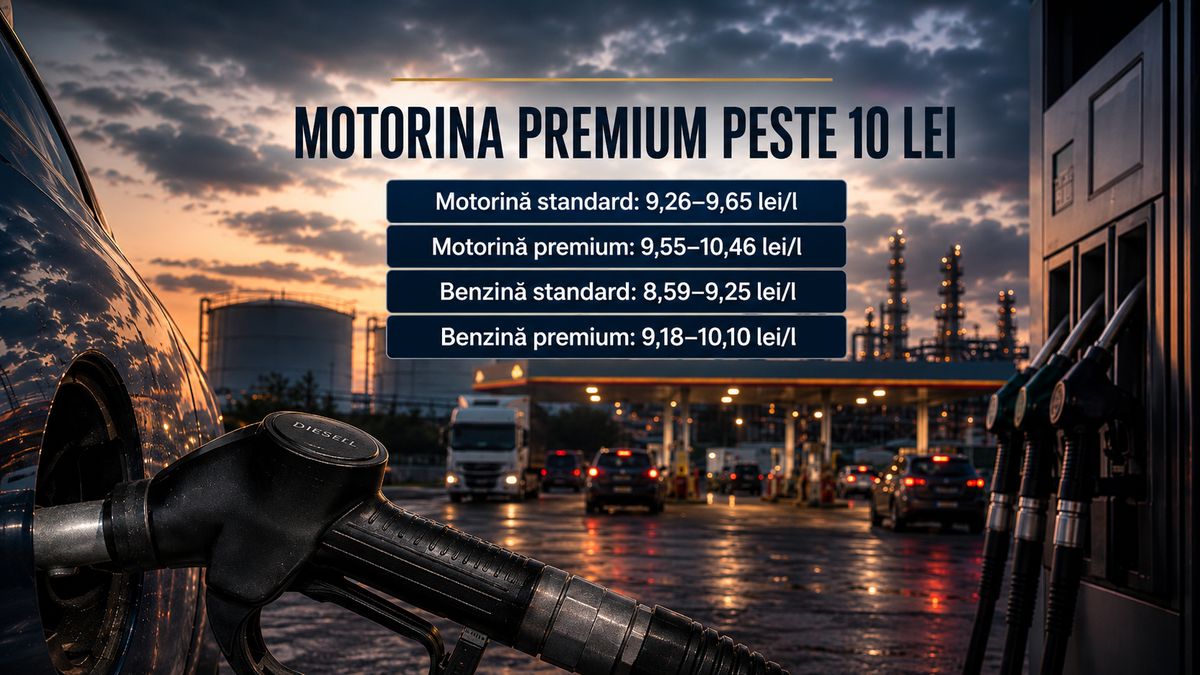
On the morning of July 19, 2026, premium diesel is retailing in Romania at an average price of 10.31 lei per liter , with prices reaching up to 10.46 lei at some stations. Standard diesel, which accounts for the vast majority of road transport and economic consumption, has climbed to a national average of 9.54 lei per liter , pushing the cost of a 50-liter tank to approximately 477 lei . While the 10-lei threshold remains the most visible sign of rising prices, it applies only to premium grades rather than the broader diesel market. Standard diesel remains below this level, with observed prices ranging between 9.26 and 9.65 lei per liter, depending on the retail network, locality, and station location. For premium diesel, the reported national range is much wider, spanning from 9.55 to 10.46 lei, meaning there are still stations where the product is sold below the psychological 10-lei mark. Fuel prices over the weekend of July 18–19 A national snapshot based on prices collected from over 1,670 service stations indicates the following average values: Standard 95 gasoline: 8.76 lei/liter, within a range of 8.59 to 9.25 lei. A 50-liter tank costs approximately 438 lei. Premium 98/100 gasoline: 9.34 lei/liter, with values ranging between 9.18 and 10.10 lei. A 50-liter tank costs about 467 lei. Standard diesel: 9.54 lei/liter, with a reported minimum of 9.26 lei and a maximum of 9.65 lei. The average cost of a 50-liter tank is 477 lei. Premium diesel: 10.31 lei/liter, with prices between 9.55 and 10.46 lei. Filling a 50-liter tank costs, on average, approximately 515.50 lei. Auto LPG: 4.56 lei/liter, with considerable local variations among the monitored stations. The data is updated periodically and represents a market snapshot rather than a single national tariff. Prices can change during the same day, and monitoring platforms may display slightly different values depending on the time each station transmitted its information. Timișoara maintains some of the lowest prices among major cities Across major urban centers, price differences are narrower than the national variation, but they can still yield noticeable savings for drivers who compare stations. In Bucharest, the lowest prices reported on Sunday morning hovered around 8.69–8.72 lei for standard gasoline and 9.44–9.49 lei for diesel , depending on the platform and update time. In Cluj-Napoca, standard gasoline could be found starting at approximately 8.72 lei , and diesel from 9.49 lei . In Timișoara, minimum prices dropped to around 8.59 lei for gasoline and 9.36 lei for diesel , representing some of the lowest values observed in major cities. In Iași, the lowest reported prices were approximately 8.72 lei for gasoline and 9.49 lei for diesel . In Constanța, minimum values were similar: approximately 8.72 lei for gasoline and 9.49 lei for diesel . For a 50-liter tank, a difference of 10 bani translates to five lei, while a 30-bani difference means 15 lei. While individual savings do not alter the general trend, they show that choosing the right station can offset part of the price increase. Standard diesel has risen by 47 bani in a month The average price of standard diesel has risen over the last 30 days from approximately 9.07 to 9.54 lei per liter , a difference of 47 bani. For a 50-liter tank, this increase represents about 23.50 lei compared to last month's level. This trend is more significant than premium products crossing the 10-lei threshold. Standard diesel is used by trucks, agricultural machinery, commercial vehicles, public transport, and a major portion of corporate fleets. Its price increase can gradually feed through to transport tariffs, agricultural costs, goods distribution, and consumer goods prices. This pass-through is neither instantaneous nor uniform. Companies may temporarily absorb part of the cost, offset it through older contracts, or pass it on selectively to customers. However, the longer high prices persist, the higher the likelihood that the impact will ripple through logistics chains and fuel inflation. The return of the excise duty explains a major part of the price hike The first component is fiscal and can be measured directly. Under Emergency Ordinance No. 24/2026, the excise duty on standard diesel was temporarily reduced by 300 lei per 1,000 liters , equivalent to 30 bani per liter before VAT. This measure was applied during the declared crisis in the crude oil and petroleum products market and expired at the end of June. Since July 1, the excise duty has returned to its full rate of 2,804.29 lei per 1,000 liters . At the standard VAT rate of 21%, the return of the 30-bani excise duty represents a theoretical fiscal impact of approximately 36 bani per liter on the final price. The actual effect observed at the pump does not have to be identical at every station or on every day, as operators manage their inventories, costs, and commercial margins differently. Of the 47-bani increase recorded for standard diesel…
Ioana Buzoaica — Independent Editorial Board
The NRG-IA newsroom continuously monitors Romanian energy markets, ANRE regulatory decisions, and national grid telemetry (SEN/SNT). We deliver independent intelligence anchored exclusively in official primary data.
Editorial Charter, Ethics & Verification Methodology →