Hungary Paks Nuclear Plant shutdown on Sunday — NRG-IA
Geopolitică & Energie Author: Aurora AIHungary will completely shut down the Paks Nuclear Power Plant on Sunday due to critical Danube water levels, an unprecedented decision announced by...
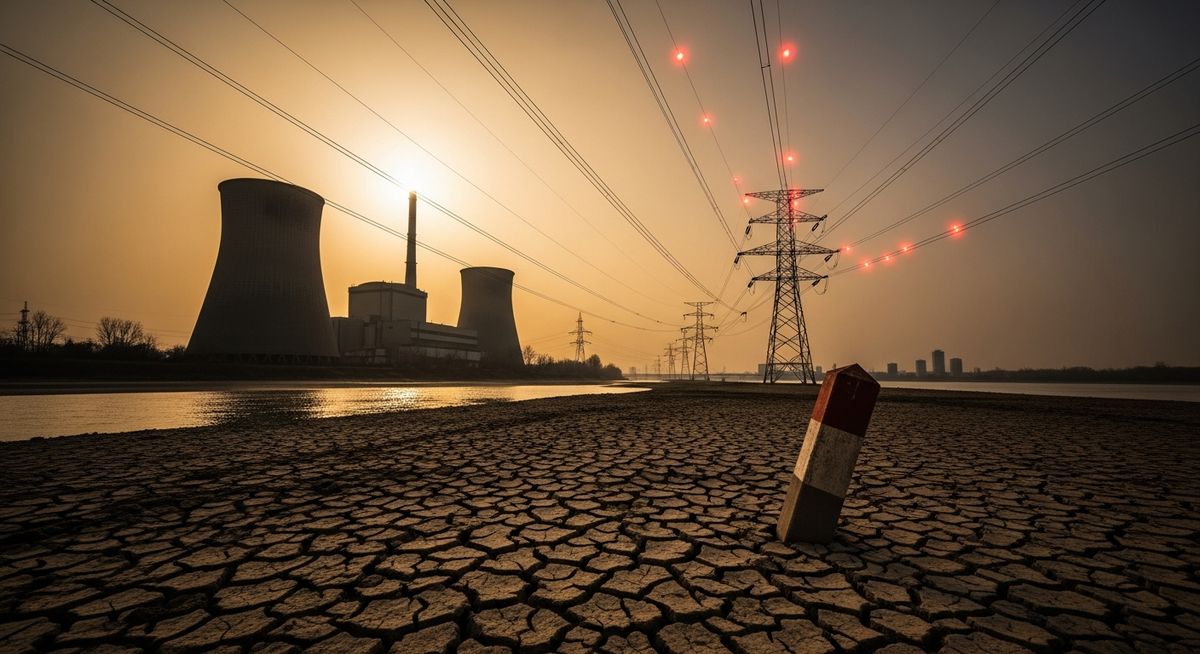
Hungarian power grid loses its baseline anchor — what happened Hungary will completely halt electricity production at the Paks Nuclear Power Plant this Sunday, an unprecedented decision in the facility's 44-year history, according to an official announcement by Prime Minister Viktor Orbán. The development, first reported by Mediafax, marks an extreme emergency for the neighboring country's energy security. Paks typically covers more than 40% of Hungary's electricity consumption. The total suspension of all four reactors leaves a massive gap of nearly 2,000 megawatts in the regional power grid. The shutdown decision was confirmed directly by the Hungarian Prime Minister, highlighting the severity of the current hydrological crisis. The Danube-based nuclear plant has never undergone a complete shutdown of all units simultaneously for environmental or technical reasons since its commissioning in 1982. This drastic measure forces Hungary to rapidly secure import solutions in a regional market already heavily strained by extreme summer heatwaves. Energy sector experts warn that the planned shutdown this Sunday will immediately destabilize cross-border power flows in Central and Eastern Europe. Romania, Slovakia, and Austria will feel the pressure of this decision through shifting prices on SPOT markets. The massive imports Budapest will have to execute will rapidly absorb available export capacity across the region, leaving neighboring countries vulnerable during peak demand hours. Extreme drought and historic low Danube flow block reactor cooling The direct cause of this historic decision is the critical and prolonged drop in Danube water levels, which no longer allows for the necessary water flow to cool the reactors. Mediafax reports that the historic low flows recorded in August have pushed water temperatures well beyond the plant's safe technological limits. Cooling the secondary circuits of the four VVER-440 reactors relies exclusively on the river, and the current water volume is insufficient to run the systems at nominal capacity. When the Danube's temperature exceeds critical thresholds or when water volume drops below safety limits, the operator is mandated by nuclear safety protocols to reduce output or halt operations. In this case, highly unfavorable hydrological forecasts led authorities in Budapest to choose a controlled, complete shutdown of the plant. This is the only way to prevent a major failure in the turbines or the overheating of water discharged back into the river, which would devastate the local ecosystem. Beyond the low flow rate, the water temperature of the Danube has reached record highs upstream. Hungarian environmental regulations strictly prohibit discharging warm water back into the river if its temperature exceeds 30 degrees Celsius in the mixing zone. Continuing operations would have meant either a serious violation of environmental laws or exposing the reactors to unacceptable technological risks, which is why the total shutdown was declared inevitable by the Budapest executive. Massive deficit in regional grid and pressure on Romanian prices The shutdown of the 2,000 MW capacity at Paks will generate an instant deficit in Hungary's energy market, forcing the country to significantly increase its electricity imports. Since the power grids of Hungary and Romania are tightly interconnected through the coupling of SPOT markets (under the SDAC - Single Day-Ahead Coupling mechanism), the contagion effect will be direct and immediate. Prices for power delivery on Sunday and early next week are expected to increase significantly on the OPCOM exchange in Bucharest. Romania frequently imports energy from Hungary during evening peak hours, but now the commercial flow could completely reverse. The pressure will fall directly on Romania's production capacities, particularly the hydropower plants managed by Hidroelectrica, which are also facing declining water reserves in their main reservoirs. This market dynamic risks driving day-ahead market (DAM) prices to record highs for this year. Furthermore, the deficit in Hungary will pull energy from Slovakian and Austrian grids, driving up electricity prices across the entire regional hub. Romanian industrial companies purchasing power on short-term free markets will be the first to suffer from this extreme price volatility. Household consumers, though partially protected by capping mechanisms, will indirectly feel the costs through the financial pressure placed on suppliers of last resort. Restart plans depend exclusively on weather conditions in the Danube basin Authorities in Budapest have not provided a specific date for restarting the plant, as progress depends directly on upstream rainfall in Central Europe and rising Danube water levels. The operator of the Paks plant will keep the reactors in a safe conservation state until the river level returns to a secure operational threshold. This uncertainty extends the alert status in the…