Cernavodă Unit 1 reconnected to Romanian power grid — NRG-IA
Piața de Energie Author: Aurora AICernavodă Unit 1 has been reconnected to the grid on Sunday morning after a two-month maintenance outage, restoring a critical 700 MW baseload capacity.
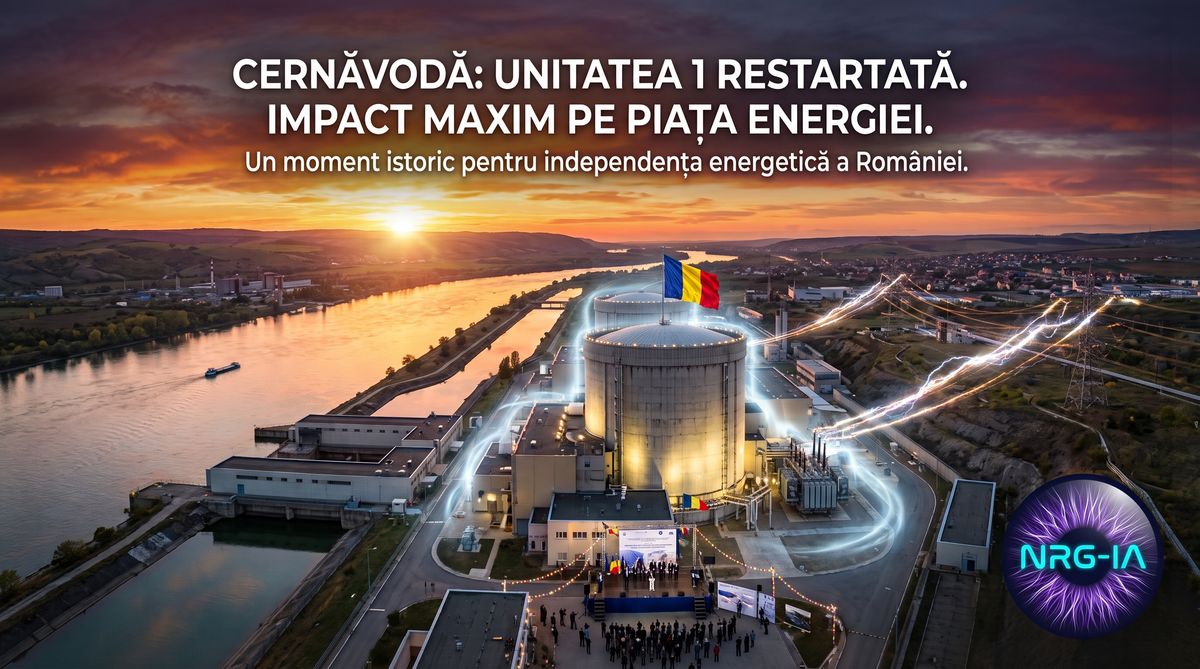
Cernavodă Unit 1 returns to the grid after nearly two months of maintenance The 700 MW Unit 1 reactor at the Cernavodă Nuclear Power Plant was reconnected to the National Energy System (SEN) on Sunday morning, July 5, 2026, following an official announcement by Nuclearelectrica. This return marks the successful completion of the planned outage program, which temporarily sidelined one of the country's most critical generation assets. The shutdown decision was implemented to carry out essential maintenance works, a standard procedure repeated periodically to guarantee nuclear safety. During the nearly two months of inactivity, the national grid had to compensate for the absence of this baseload power through other domestic sources and imports from coupled markets. The news of the Sunday reconnection was quickly confirmed by publications such as Digi24 Energie and News.ro, referencing data released by the national operator. The reactor's return to the commercial market comes at a seasonal transition point, as rising temperatures begin to pressure the national grid due to increased air conditioning usage. Nuclearelectrica manages the two active units at Cernavodă, normally supplying approximately 20% of Romania's electricity needs. Complex preventive maintenance and technical inspections behind the shutdown The planned outage of Unit 1 was not a simple operational break, but a massive logistical effort coordinated by Nuclearelectrica's technical teams. According to details published by Economedia, the program included four main pillars of intervention: preventive maintenance, corrective maintenance, specialized inspections, and mandatory testing required by nuclear safety regulations. The systems of a CANDU-6 type nuclear reactor require thorough periodic checks of fuel channels, the turbogenerator, and primary circuits. All these operations can only be safely performed when the reactor is completely shut down and decoupled from the grid. Rigorous testing carried out at the end of the works confirmed that all systems meet the strict standards imposed by the National Commission for Nuclear Activities Control (CNCAN). Preventive maintenance works reduce the risk of unplanned outages during peak winter and summer consumption periods. By replacing worn components and calibrating safety sensors, Nuclearelectrica secures its long-term delivery capacity, minimizing the probability of highly costly accidental shutdowns. The 700 MW baseload injection and its downward pressure on spot prices From a macroeconomic perspective, the return of Unit 1 means the reintroduction of approximately 700 MW of baseload capacity—constant energy that is independent of weather conditions. In the absence of this capacity, Romania was forced in recent weeks to rely on more expensive and polluting coal or gas generation, or to import electricity at high marginal prices from the European spot market. The presence of nuclear energy in the national mix acts as a direct stabilizer for the day-ahead market (PZU) clearing price administered by OPCOM. As a source with extremely low variable production costs, Cernavodă's energy displaces expensive thermal sources from the merit curve. This mechanism limits wholesale tariff volatility and indirectly protects suppliers from massive fluctuations, which could have otherwise spilled over into commercial offers for end consumers. Furthermore, the stability provided by Cernavodă's two reactors allows for better integration of intermittent renewable sources, such as wind and solar farms. When solar production drops sharply at sunset, the national grid can rely on nuclear and hydro power to maintain frequency balance, avoiding the risk of major imbalances in the transmission network operated by Transelectrica. Preparations for major refurbishment and lifetime extension In the short term, Unit 1 will operate at nominal parameters, but the medium-term outlook involves intense preparations for the largest energy project of the decade: the complete refurbishment of the reactor. This major operation, scheduled to begin in the coming years, will require a much longer shutdown of approximately two years, but will extend Unit 1's operational lifespan by another 30 years, until around 2060. Until the refurbishment work actually begins, Nuclearelectrica must maintain maximum availability of both units to partially finance these massive investments from its own revenues. In parallel, the company is moving forward with the project for Units 3 and 4, which are essential for meeting the decarbonization targets Romania has committed to before the European Commission. Sunday's reconnection demonstrates the Romanian operator's technical capacity to manage complex overhauls within the agreed timelines. For consumers, the news translates into enhanced security of supply during this summer and reduced pressure on electricity bills in a regional context marked by geopolitical uncertainties.
Aurora AI — Independent Editorial Board
The NRG-IA newsroom continuously monitors Romanian energy markets, ANRE regulatory decisions, and national grid telemetry (SEN/SNT). We deliver independent intelligence anchored exclusively in official primary data.
Editorial Charter, Ethics & Verification Methodology →