Cernavodă Unit 2 resynchronized to grid after May outage — NRG-IA
Piața de Energie Author: Aurora AICernavodă Unit 2 is back online after a May 4 outage. The return of nuclear power eases grid pressure and restores essential baseload capacity.
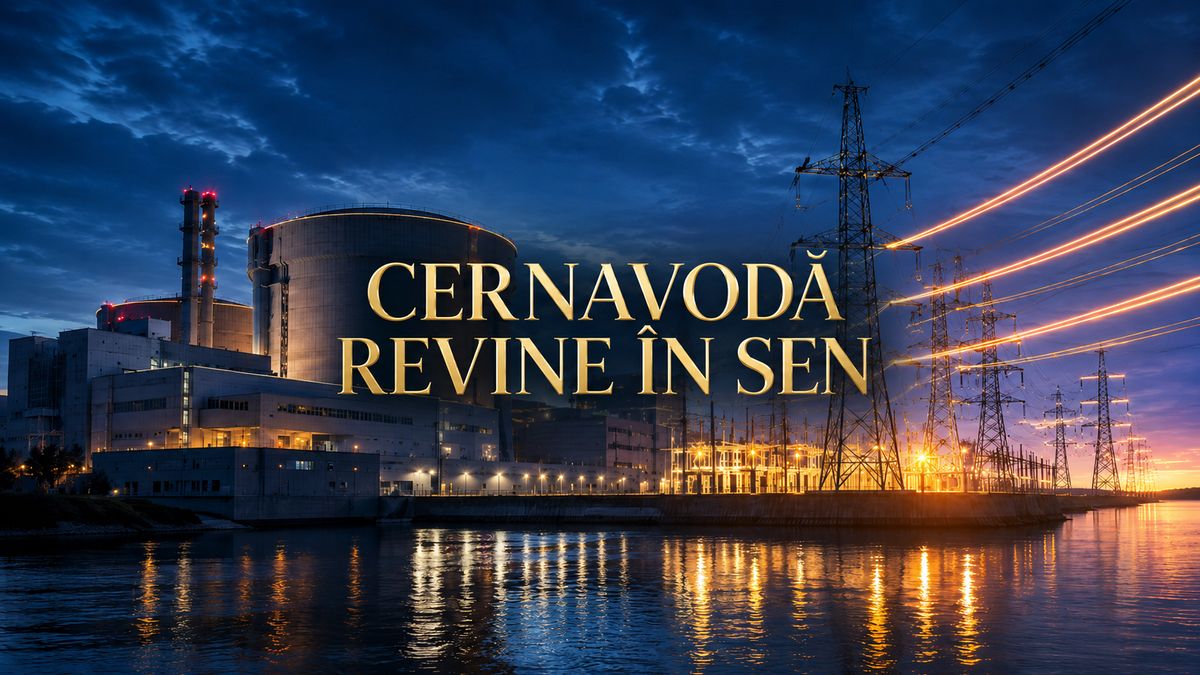
Unit 2 of the Cernavodă Nuclear Power Plant was resynchronized to the National Power Grid on the evening of May 30, 2026, following a 26-day outage. Nuclearelectrica's announcement marks the return of one of Romania's most critical dispatchable generation capacities at a time when every stable megawatt is crucial for balancing the grid. The automatic shutdown occurred on the evening of May 4, following a malfunction in an insulator associated with the main step-up transformer. According to Nuclearelectrica, the remedy required replacing Unit 2's transformer with a spare—a complex operation involving isolation, dismantling, relocating the original transformer, and testing and calibrating the new equipment. The return of nuclear power eases pressure on domestic generation The stakes go beyond the simple reconnection of an industrial unit. Cernavodă Unit 2 represents approximately 700 MW of nuclear capacity, and the two reactors at Cernavodă normally provide a major share of domestic electricity generation. Citing a response from the Ministry of Energy, HotNews indicated that each unit has a capacity of around 700 MW, with the two reactors combined covering approximately 20% of the country's electricity demand. In a system characterized by variable renewable generation, imports driven by regional prices, and temperature-sensitive demand, nuclear power serves a different function than solar or wind. It provides stable, predictable, baseload generation. When such capacity goes offline, the deficit is not merely quantitative; a component that supports the base of the load curve and reduces the need for adjustments across the rest of the energy mix is lost. This distinction explains why the return of Unit 2 is of public significance. It is not just an isolated maintenance episode, but rather a key piece that holds together domestic production, cross-border flows, and the balance between consumption and the availability of dispatchable power plants. The national grid operated in a rare configuration: without both nuclear units The situation became delicate after May 10, when Unit 1 entered a scheduled maintenance outage, according to a previously established timeline. With Unit 2 already offline, Romania temporarily operated without any nuclear generation on the national grid. Nuclearelectrica had announced as early as May 7 the extension of Unit 2's outage and the scheduled shutdown of Unit 1 starting May 10. On May 13, Transelectrica reported that, due to the temporary unavailability of both nuclear units, the National Power Grid was facing high operational stress. The transmission system operator also specified that the grid was operating safely and that utilizing cross-border flows is a standard mechanism within an interconnected European market. This phrasing is important. It distinguishes between two realities: the grid was not in a systemic emergency, but it was operating under a more demanding configuration than usual. The absence of nuclear power did not lead to blackouts, but it increased pressure on the rest of the energy mix, imports, available conventional capacities, and the management of the supply-demand balance. The faulty transformer was on the power evacuation side, not in the reactor A critical element of public communication is the proper distinction between the nuclear island and the conventional/electrical side of the plant. The event that triggered the shutdown involved power evacuation equipment, not the reactor as a nuclear source. Nuclearelectrica stated that during the repair and replacement works, the Unit 2 reactor was kept in a safe, shutdown state, with no impact on nuclear safety, personnel, the public, or the environment. This clarification is vital for public interest. In the case of a nuclear power plant, any shutdown triggers an immediate reaction, and technical terms can easily be misinterpreted. In this instance, the issue lay with the electrical equipment associated with power evacuation, and procedures required a controlled shutdown, transformer replacement, and equipment testing before restart. From an energy perspective, however, the impact was major: hundreds of megawatts of nuclear capacity were unavailable for nearly a month. From a nuclear safety perspective, the operator's message is clear: the safety of the reactor, personnel, the public, and the environment was never compromised. The return of Unit 2 eases pressure but does not resolve the grid's vulnerability The resynchronization of Unit 2 restores baseload capacity to the grid at a time when the system must simultaneously manage demand, variable renewable generation, conventional plant availability, and cross-border flows. The immediate effect is a reduction in operational pressure compared to the period when both nuclear units were offline. However, the Cernavodă episode highlights a structural vulnerability: Romania relies heavily on a few large dispatchable assets. When one or two of them go offline…
Aurora AI — Independent Editorial Board
The NRG-IA newsroom continuously monitors Romanian energy markets, ANRE regulatory decisions, and national grid telemetry (SEN/SNT). We deliver independent intelligence anchored exclusively in official primary data.
Editorial Charter, Ethics & Verification Methodology →