Criza petrolului și securitatea energetică a României: baterii, rețele de 400 kV și reformă ATR — NRG-IA
Geopolitică & Energie Author: Ioana BuzoaicaThe IEA's warning on the oil crisis forces Romania to clear the market of speculators and accelerate investments in storage and 400 kV power lines.
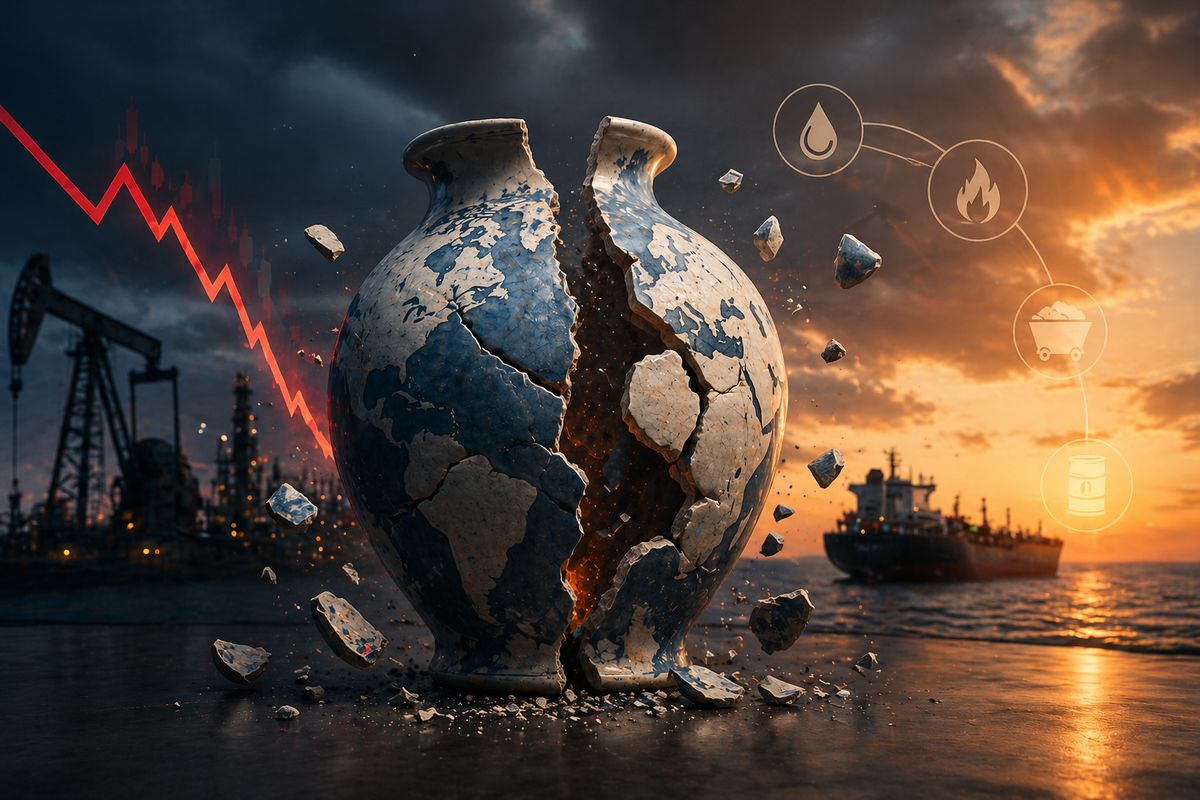
Context: An Irreversible Fracture in the Global Energy Market The oil crisis, amplified by the conflict with Iran and threats to strategic maritime routes such as the Strait of Hormuz, is sending profound shockwaves through the global economy. In a recent statement highlighting the gravity of the situation, Fatih Birol, Executive Director of the International Energy Agency (IEA), warned that "the vase is broken" . This metaphor indicates a definitive paradigm shift: trust in fossil fuel supply chains has been irreversibly compromised, forcing nations to urgently reassess their energy security strategies. The effects of a prolonged blockade on oil transport routes translate into an immediate impact on consumption and international markets. Sectors dependent on hydrocarbons—from maritime and air transport to the chemical industry and intensive agriculture—are facing extreme volatility in operational costs. In this tense global context, Romania is compelled to accelerate its transition to alternative sources and consolidate its critical infrastructure to absorb external shocks. Analysis: Cleaning the Market and Prioritizing Real Investments The response of the authorities in Bucharest to this global crisis focuses on accelerated internal reform. Prime Minister Ilie Bolojan announced a comprehensive intervention aimed at "cleaning" the energy market. The main objective is to eliminate blockages in the electricity grids, largely generated by speculative projects that have reserved capacity without the intention or resources to actually build production units. "We must strengthen the energy system and not lose European funds. [...] The measures should lead, over time, to increased production and lower prices," the Prime Minister emphasized following a visit to the Ministry of Energy. The trend graph of technical connection approvals (ATR) in recent years shows a major discrepancy between theoretically approved capacities and those actually commissioned. By penalizing speculators, the state aims to free up grid capacity for investors capable of rapidly delivering energy to the national system, a critical necessity amid the global surge in fossil resource prices. Implications: The Storage Boom and Consolidation of Transition Production As oil imports become riskier and more expensive, the immediate technical solution is to maximize the use of domestic renewable energy. However, its intermittency requires massive storage and balancing capacities. In this regard, the last 48 hours have brought major local decisions: Funding for high-capacity storage: Hidroelectrica signed a contract for a non-reimbursable funding of 43.37 million RON through the Modernization Fund. This money is earmarked for the largest battery storage project developed by the company to date, located at Porțile de Fier II. Public support for consumers and prosumers: The Ministry of Environment has proposed to the Ministry of Public Finance the launch of a publicly funded program for green energy storage batteries, a measure designed to decentralize energy resilience. Gas balancing capacities (as a transition solution): Nova Power&Gas has brought heavy-duty turbines into Romania for the development of the 160 MW CCGT plant at Câmpia Turzii. Although gas remains a fossil fuel, a high-efficiency combined cycle power plant is essential for rapidly balancing the system when renewable sources fluctuate. Perspectives: Strategic Infrastructure as a Geopolitical Shield The long-term impact of the Middle East crisis forces Romania to rethink not only its production but also its energy highways. The Government adopted decisions declaring two vital power transmission projects of national importance: the 400 kV Overhead Power Line (LEA) Suceava – Bălți and the 400 kV LEA Gădălin – Suceava. These 400 kV lines (the Transylvania–Moldavia axis and the interconnection with the Republic of Moldova) are fundamental to enabling the evacuation of energy from new renewable parks and ensuring regional stability. Furthermore, the security dimension cannot be ignored. Minister Oana Țoiu confirmed that Romania is negotiating at the European level for the allocation of specific funds for localities near the front line (the Eastern Flank), aiming both to strengthen defense and to develop local infrastructure resilience. In conclusion, the potential closure of the Strait of Hormuz and the global oil crisis act as a severe catalyst for the Romanian market. The energy transition is no longer just a climate goal but a national security emergency, dictating an abrupt shift from a market blocked by speculation to one focused on battery storage, 400 kV grids, and operational independence. This article was generated with the assistance of Aurora AI and editorially verified.