Russia Oil Gas Revenues Drop 22.7% H1 2026 — NRG-IA
Geopolitică & Energie Author: Aurora AIRussia's oil and gas revenues fell 22.7% in H1 2026 as Ukrainian drone strikes disabled up to a third of the country's refining capacity.
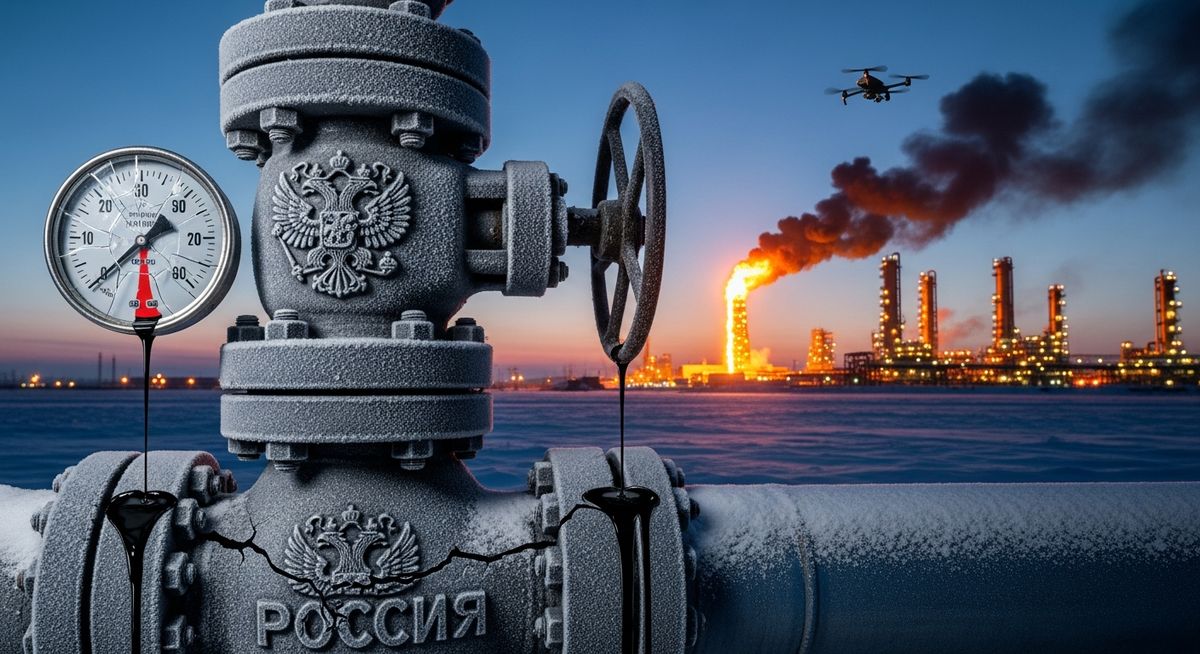
Moscow Loses 22.7% of Energy Revenues in the First Half of 2026 Russia's federal budget recorded a 22.7% drop in oil and gas revenues in the first half of 2026, collecting 3.66 trillion rubles (41.98 billion euros), according to official data released by the Ministry of Finance in Moscow and analyzed by G4Media and Economedia. This severe contraction highlights the cumulative impact of international sanctions and the degradation of Russian industrial infrastructure. The amount collected between January and June 2026 represents a direct blow to the Kremlin's ability to finance public spending and military logistics. The nearly one-quarter drop in revenues shows that, despite Moscow's efforts to redirect trade flows to Asia, selling prices and volumes of high-value-added products have been severely affected. This negative dynamic comes at a time when Russia's defense spending is at a record high, forcing the Ministry of Finance in Moscow to seek alternative sources of financing or accept a growing budget deficit. Ukrainian Drones Knock Out Up to a Third of Russian Refineries The direct cause of this financial collapse is the drastic reduction in domestic crude processing capacity. Ukrainian drones have knocked out between 25% and one-third (approximately 33%) of Russia's total refining capacity, according to sources cited by G4Media. This precision air campaign targeted critical nodes of Russian oil infrastructure. Systematic strikes focused primarily on atmospheric and vacuum distillation columns, high-tech equipment essential for obtaining refined fuels. Due to Western sanctions blocking imports of advanced industrial components and technology, replacing or repairing these complex installations is extremely difficult and time-consuming. Consequently, Russia was forced to alter its commercial strategy, exporting more raw, unprocessed crude oil instead of refined products (such as diesel and gasoline), which carried much higher profit margins. This forced reorientation flooded Asian markets with cheap Russian crude, sold at deep discounts compared to the international Brent benchmark. Domino Effects on the Regional Fuel Market and Pressure on European Margins Although Romania and other EU member states no longer import crude oil or petroleum products directly from the Russian Federation, the effects of this production crisis are felt indirectly in the regional market. The drop in Russian diesel volumes exported to traditional destinations in Turkey and North Africa has triggered a reconfiguration of trade flows in the Mediterranean basin. Refineries in Turkey, which processed cheap Russian crude to export refined products to Europe, face a reduction in raw materials and intermediate products. This mechanism keeps refining margins in Europe elevated, putting pressure on pump prices in Romania. For residential and industrial consumers in the region, instability in the Russian refining sector translates into increased volatility in diesel and gasoline prices. Any additional blockade in the Black Sea or a new round of attacks could generate rapid price corrections on commodity exchanges, subsequently reflected in local distribution tariffs. Outlook for Winter 2026: Risk of Domestic Shortages in Russia and Market Reaction In the short term, Moscow faces a major risk of fuel shortages in its domestic market before the start of the cold season in 2026. To secure the needs of the agricultural sector and the military, the Russian government could be forced to extend or tighten export bans on gasoline and diesel. This decision would further reduce the flow of hard currency entering the country, exacerbating the ruble's depreciation and domestic inflationary pressure. In NRG-IA's interpretation, Russia's ability to maintain budgetary stability now depends directly on the pace at which it can improvise technical solutions for damaged refineries. For NATO's eastern flank states, monitoring these developments is critical. Securing alternative supply routes through Mediterranean corridors and maintaining high processing capacity in Romanian refineries remain the main protective measures against supply shocks in the second half of 2026.
Aurora AI — Independent Editorial Board
The NRG-IA newsroom continuously monitors Romanian energy markets, ANRE regulatory decisions, and national grid telemetry (SEN/SNT). We deliver independent intelligence anchored exclusively in official primary data.
Editorial Charter, Ethics & Verification Methodology →