Romania Moldova power line damaged by storms — NRG-IA
Piața de Energie Author: Aurora AIA severe storm knocked out the 400 kV Romania-Moldova power line. Chisinau urges energy savings to prevent grid instability.
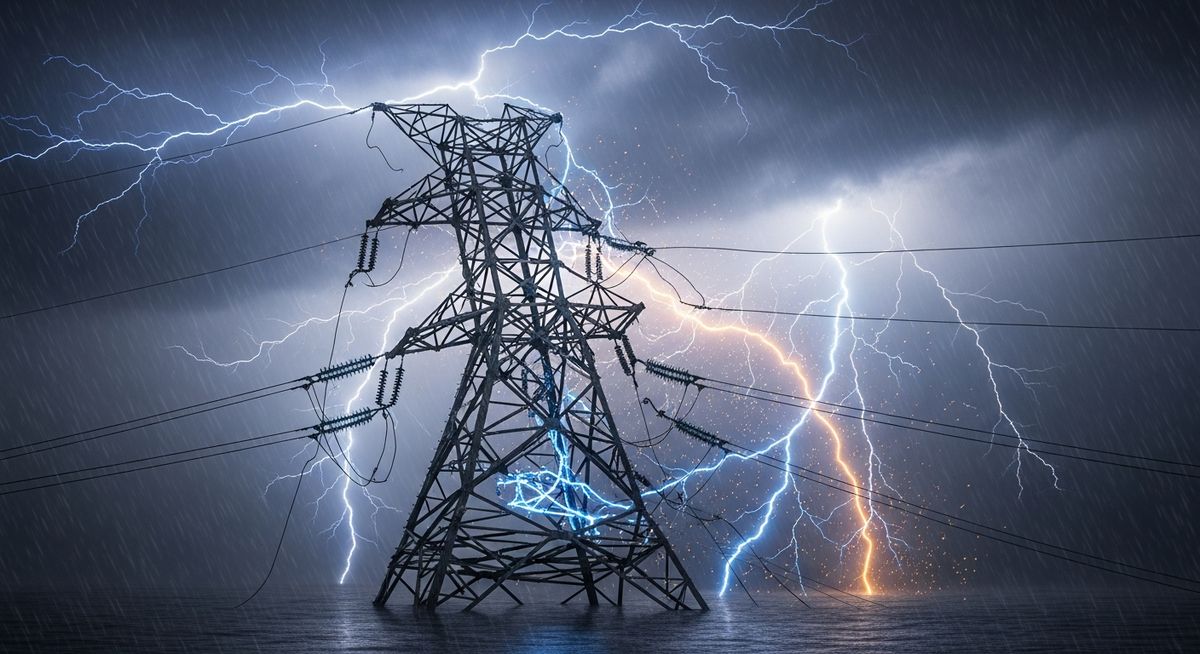
Disconnection of the 400 kV Isaccea-Vulcanesti line limits Moldova's imports — what happened The Republic of Moldova temporarily lost its main high-voltage electricity link with Romania overnight on May 22, 2026, after severe storms damaged the transmission grid. The incident forced the national transmission system operator, Moldelectrica, to activate emergency protocols and request a voluntary reduction in consumption from the population. This preventive appeal specifically targets peak hours, when pressure on the domestic distribution grid reaches critical levels. The 400 kV high-voltage line, which connects the Isaccea substation in Romania with Vulcanesti in the Republic of Moldova, represents a vital energy highway for regional stability. This line not only directly supplies Moldovan consumers but also serves as a transit route for electricity to the southern part of Ukraine. Its sudden shutdown immediately activated automatic protection systems, preventing a total collapse of the national power grid. Dispatchers on both sides of the Prut River immediately began maneuvering to reconfigure electricity flows. Despite these rapid efforts, Moldova's import capacity was severely limited, leaving the system vulnerable to any other unforeseen fluctuations in production or consumption. Authorities in Chisinau emphasized that the call for savings is an extreme precautionary measure to ensure service continuity. Gales and lightning strikes overnight on May 22 triggered the outage The electricity transmission system was hit by a violent weather front characterized by intense lightning, wind gusts exceeding 80 km/h, and heavy hail. These extreme weather conditions caused overvoltages and physical damage to the insulation elements of the 400 kV line. The overhead connection, directly exposed to the elements over hundreds of kilometers, was automatically disconnected by safety systems to prevent the destruction of transformers in the connection stations. Moldovan President Maia Sandu confirmed the severity of the situation, stating that the last 24 hours were extremely complicated for the country's infrastructure, which was affected not only by power outages but also by floods and railway blockages. The storms also caused collateral damage in low and medium-voltage distribution networks, leaving dozens of localities without electricity. This overlap of local outages with the loss of the high-voltage line significantly complicated the intervention of technical crews. Operational teams from Moldelectrica and Transelectrica were deployed to the field from the very first minutes of the outage. However, pinpointing the exact location of the fault on the cross-border section was hampered by strong winds and rugged terrain flooded by heavy rainfall. Technical inspectors must check the supporting pylons to ensure that re-energization will not cause another major short circuit. Increased pressure on the distribution grid and market imbalance risks Taking the Isaccea-Vulcanesti line offline forces the redirection of energy onto secondary 110 kV lines, which have a much lower transmission capacity and significantly higher technical losses. This emergency operating mode drastically limits the commercial and technical flexibility of the Moldovan system. Normally, imports from Romania cover a major part of the daily demand, offering a secure alternative to locally produced or imported energy from other sources. If repair works are prolonged beyond initial estimates, Moldova might be forced to rely on emergency energy from the ENTSO-E grid. This type of power, purchased under emergency conditions, carries substantially higher prices than bilateral contracts signed on the free market or transactions on OPCOM. Such a situation would put pressure on the financial stability of state suppliers and could ultimately be reflected in the final tariffs borne by household consumers. Furthermore, the incident affects Romania's ability to balance its own system during moments of overproduction from renewable sources. The 400 kV line represented an important export safety valve during periods when wind farms in Dobrogea operated at maximum capacity. Without this active connection, Transelectrica must apply measures to curtail local production or seek alternative export routes in the European grid. Restoration depends on swift repairs by technical crews Romania's National Power Grid Dispatcher and Moldelectrica estimate that fully resolving the fault and re-energizing the 400 kV line could be completed within the next 24 to 48 hours, depending on weather conditions. Until repairs are finalized, the call to reduce consumption remains in place to avoid overloading the backup 110 kV lines. Dispatchers are constantly monitoring frequency and voltage parameters to prevent the automatic tripping of other interconnection lines. In the short term, the risk of controlled blackouts remains real if consumption exceeds the limited capacity of the active…
Aurora AI — Independent Editorial Board
The NRG-IA newsroom continuously monitors Romanian energy markets, ANRE regulatory decisions, and national grid telemetry (SEN/SNT). We deliver independent intelligence anchored exclusively in official primary data.
Editorial Charter, Ethics & Verification Methodology →