Dynamic energy tariffs: Why PPC offers free electricity — NRG-IA
Piața de Energie Author: Aurora AIPPC attracted 4,000 clients in 48 hours with free energy at noon. Dynamic tariffs become the only solution against 250 EUR/MWh evening imports.
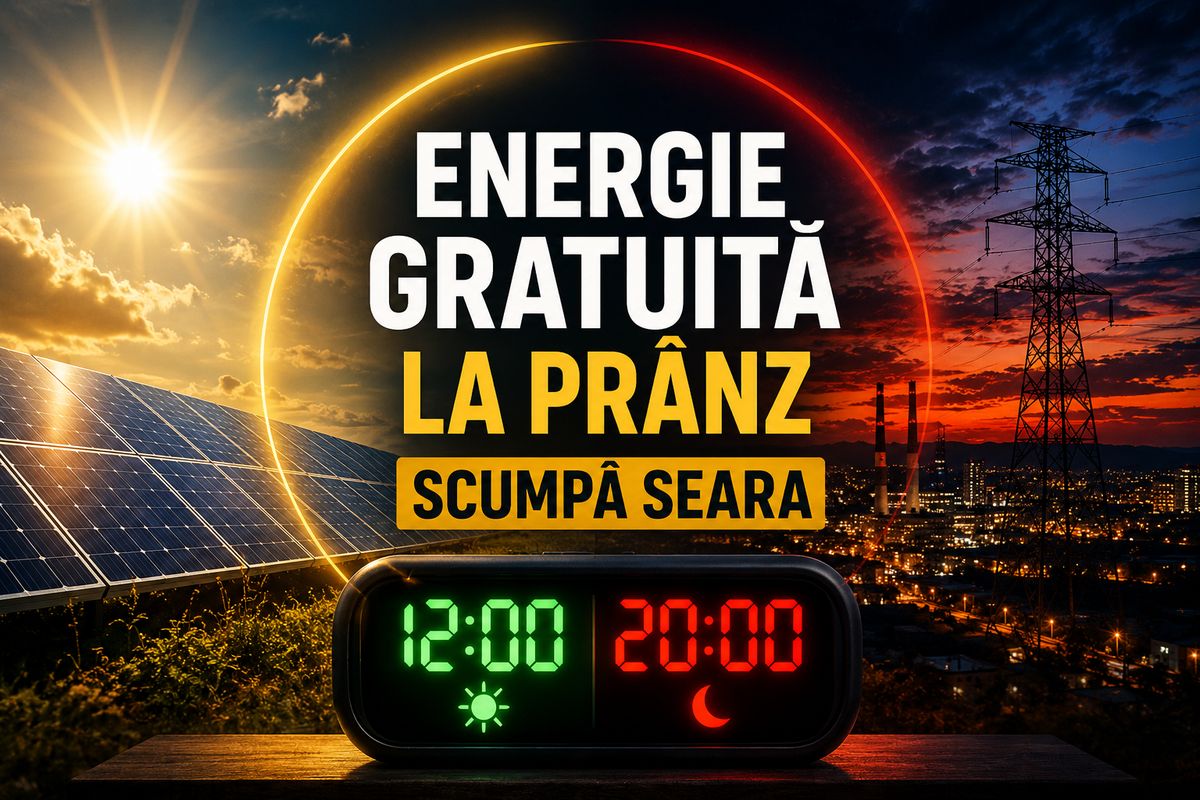
Current Situation Four thousand Romanians exhausted the first free electricity offer in the history of the local market in just 48 hours, signaling a seismic shift in how we will pay for power. PPC Energie has launched an unprecedented pilot project. Selected customers receive active electricity at zero cost during certain daytime hours. The goal is to absorb massive production from photovoltaic panels. The interest was immense. According to e-nergia data, the 4,000-customer cap was reached in just two days. This commercial move does not appear in a vacuum. It reflects a profound balancing crisis within the national energy system. Romania faces an extremely costly daily paradox. During the day, the sun generates a surplus that the grid cannot store. Early in the morning, the situation is already tense. Digi24 data shows that at 08:00, national consumption reaches nearly 5,200 MWh, while production struggles to keep up. A few hours later, the sun floods the grid, crashing wholesale prices. Analysis PPC's offer is not an act of corporate charity. It is a mathematical and financial necessity. Suppliers prefer to give energy away to household consumers rather than sell it at a loss on external markets. This free offer applies exclusively to active energy; network fees still apply. In April, Romania exported electricity at average prices of about 50 euros/MWh. During the same weeks, Romania imported energy during evening peak hours at prices that climbed up to 250 euros/MWh. This quote from Energy-Center perfectly explains the logic behind dynamic tariffs. The price difference between noon and evening has become unsustainable. Romania sells cheap when it has a solar surplus and buys five to seven times more expensive when the sun sets. Without battery storage or pumped-storage hydro, the only immediate solution is shifting human consumption. Dynamic tariffs transfer the responsibility of balancing to the consumer. If you start the washing machine at 13:00, you help the grid and are rewarded. If you start it at 20:00, you contribute to the 250 EUR/MWh imports and, in the future, you will be financially penalized. It is the transition from a passive to an active consumer. Implications for Market and Consumers The absolute winners of this transition will be flexible and digitized consumers. Those working from home, EV owners, and users of smart appliances will see real decreases on their bills. For them, free energy at noon represents a household arbitrage opportunity. On the opposite end are rigid consumers. Employees who leave at 08:00 and return at 18:00 cannot significantly shift consumption. When price caps expire, these clients will directly bear the huge cost of evening imports. Their bills could rise exponentially between 19:00 and 22:00. For the market, the success of the PPC pilot is a clear validation signal. Competitors will be forced to follow suit. We can expect all major suppliers to launch time-differentiated tariff packages in the next 12-18 months. However, the expansion of these programs critically depends on one factor: the pace of smart meter installation. Scenarios and Perspectives In an optimistic scenario, the success of this pilot accelerates grid digitalization. Authorities and distributors unlock funds for smart meters. By 2026, hundreds of thousands of Romanians adopt dynamic tariffs. Consumption shifted to noon cuts the evening peak load, drastically reducing expensive imports from Bulgaria or Hungary. The national energy bill drops. The pessimistic scenario is much more likely in the short term. The pilot remains a niche for already technologically equipped clients. The vast majority of consumers remain captive to classic consumption profiles. When state subsidies disappear, the shock of evening prices (250 EUR/MWh) hits family budgets directly. The lack of smart meters turns energy into a luxury good after dark. For consumers, the message is clear. The era of fixed-price energy, regardless of the hour of consumption, is coming to an end. Check if you have a smart meter installed. Start analyzing your consumption habits. The ability to shift the operation of large household appliances to noon will soon become the most effective way to protect your budget.
Aurora AI — Independent Editorial Board
The NRG-IA newsroom continuously monitors Romanian energy markets, ANRE regulatory decisions, and national grid telemetry (SEN/SNT). We deliver independent intelligence anchored exclusively in official primary data.
Editorial Charter, Ethics & Verification Methodology →